
Research status: This guide was fact-checked against official tourism organizations, attraction operators, cultural institutions, and venue websites available through September 26, 2026. Opening days, admission prices, exhibition schedules, reservations, and seasonal conditions can change, so fixed-date travelers should recheck the relevant official site shortly before visiting.
Tokyo rewards travelers who look beyond a simple list of famous landmarks. A trip can move from an Edo-period temple district to contemporary architecture, from a quiet Shinto forest to an anime shopping complex, and from sushi counters to mountain trails without leaving the wider Tokyo region. That variety—historic neighborhoods, Japanese culture, food, shopping, nightlife, parks, seasonal experiences, family attractions, pop culture, and nature—is central to building a useful Tokyo itinerary.
The best approach is not to chase the maximum number of Tokyo tourist spots. Instead, combine major attractions with neighborhoods that interest you and group places geographically. Tokyo’s rail network makes distant parts of the city accessible, but repeatedly crossing the metropolitan area wastes both time and energy.


A few current details are particularly important when planning a 2026 trip. Tsukiji’s wholesale market moved to Toyosu in 2018, although Tsukiji Outer Market remains a major food destination. teamLab Borderless is now in Azabudai Hills, while teamLab Planets is in Toyosu—not Odaiba. The Ghibli Museum requires advance reservations and does not sell admission tickets at the museum. Tokyo Disney Resort, despite its name, is in Urayasu in neighboring Chiba Prefecture rather than Tokyo Metropolis.[1]
Best Tokyo Attractions for First-Time Visitors
Shibuya
Shibuya combines fashion, shopping, restaurants, nightlife, music, large-scale commercial development, and one of Tokyo’s most recognizable urban scenes. The area works particularly well late in the afternoon because you can explore shops and cafés in daylight, see the district transition through sunset, and remain for illuminated streets after dark.
It is also a useful geographic anchor. Harajuku, Meiji Jingu and Omotesando are nearby, allowing visitors to experience a shrine forest, youth fashion, contemporary architecture and modern Shibuya within the same part of western central Tokyo.[2]
Experience Shibuya Crossing
Shibuya Scramble Crossing sits immediately outside Shibuya Station and has become an emblem of Tokyo’s pedestrian density and visual energy. Watching it from street level gives the most direct experience: when pedestrian signals change, people move across the intersection from several directions simultaneously.[3]
For a higher perspective, Shibuya Sky occupies the upper levels of Shibuya Scramble Square and includes an open-air rooftop observation area about 229 meters above the district. The rooftop may close when weather conditions are unsuitable, and sunset periods are particularly popular, so advance booking is sensible for travelers with a specific time in mind.[4]
Photography is easier from a viewpoint than from the middle of the crossing. Treat the intersection as working transport infrastructure rather than a photo set: cross with the signal and avoid stopping where you obstruct other pedestrians.
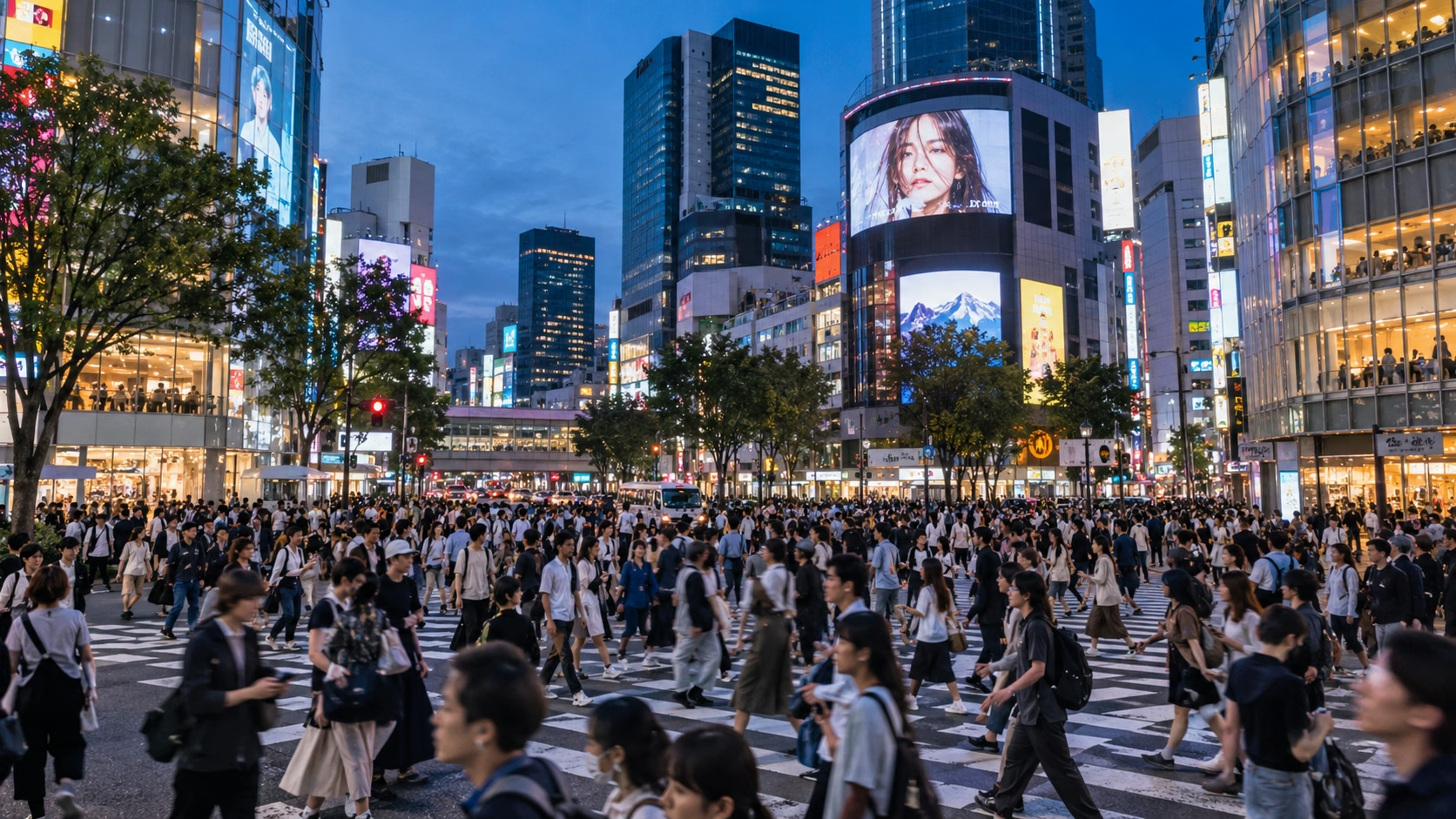
Crowds crossing Shibuya Scramble Crossing beneath illuminated buildings at dusk
Explore Shinjuku
Shinjuku demonstrates how several versions of Tokyo can coexist within a relatively compact district. West Shinjuku is characterized by high-rise offices and hotels, while the eastern side contains large retailers, restaurants, entertainment streets and nightlife.
It is worth seeing during both daylight and evening. Daytime works well for shopping and urban architecture; after dark, illuminated streets and dense restaurant districts become a larger part of the experience.
Shinjuku is also one of Tokyo’s most important transportation hubs, making it useful as a starting point for western Tokyo excursions such as Mount Takao and parts of Okutama.
Discover Historic Asakusa
Asakusa provides one of the clearest contrasts with Tokyo’s modern commercial districts. Its traditional shopping streets, temple precincts, older businesses, sweets and craft shops create an atmosphere associated with the city’s shitamachi, or historic downtown culture.
A practical walking sequence is Kaminarimon Gate → Nakamise shopping street → Sensoji → surrounding side streets. If you have additional time, continue toward the Sumida River and Tokyo Skytree.
Visit Sensoji Temple
Sensoji is the central landmark of Asakusa and one of Tokyo’s most significant Buddhist sites. Visitors normally approach through Kaminarimon, continue along Nakamise and arrive at the temple complex.
This is also a good place to understand several aspects of Japanese religious culture: incense, purification, prayer, omikuji fortunes and goshuin temple stamps. Temple etiquette differs from Shinto shrine etiquette; clapping, for example, is associated with shrine worship rather than Buddhist temple prayer.[5]
Early morning is particularly rewarding because the district is considerably quieter before shops and tour groups become active.
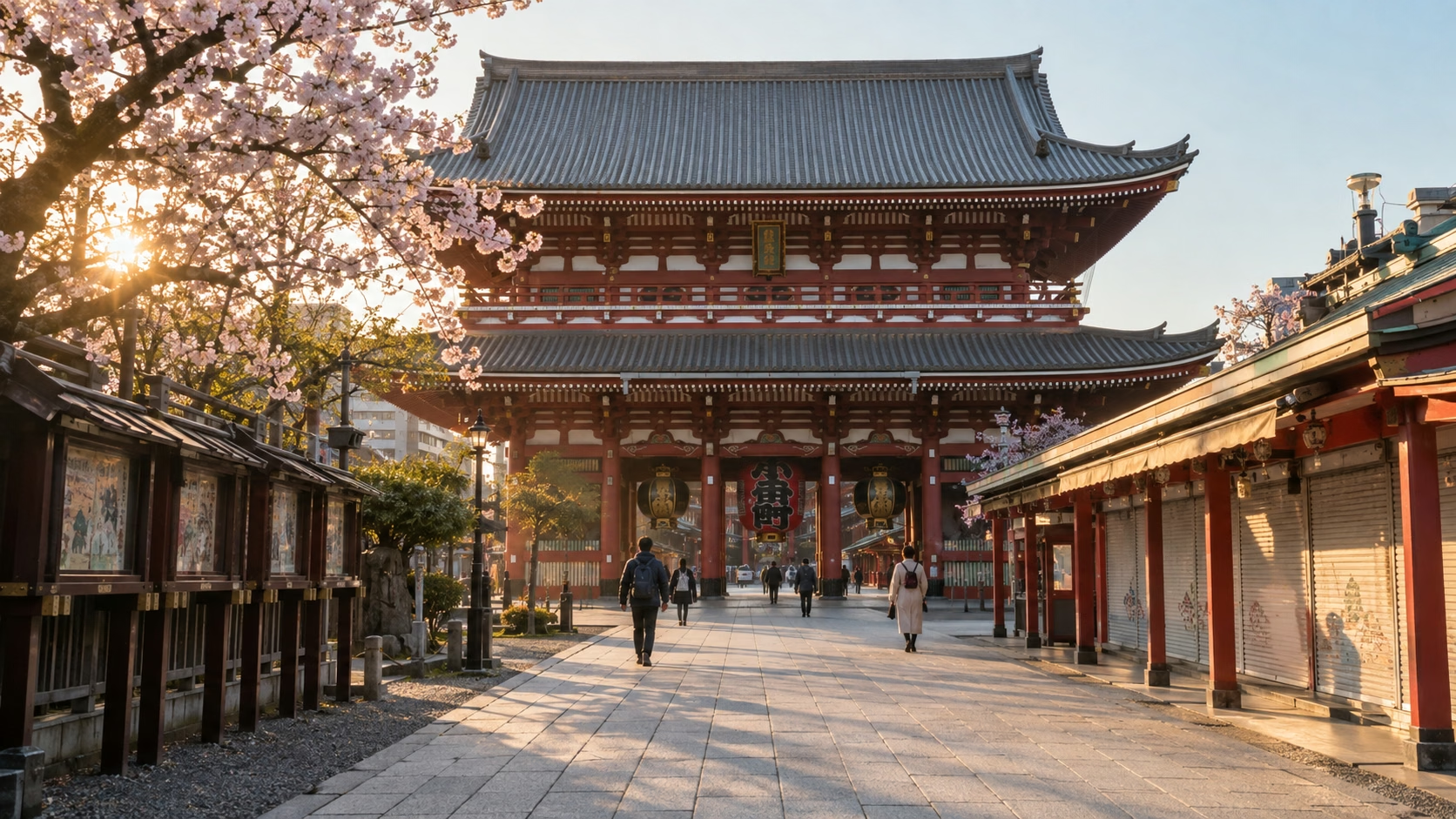
Sensoji temple approach in Asakusa during a quiet golden morning
See Tokyo from Tokyo Skytree
Tokyo Skytree reaches 634 meters, with the Tembo Deck at approximately 350 meters and the Tembo Galleria reaching roughly 450 meters. Its height gives it a fundamentally different viewing experience from Tokyo Tower or the rooftop experience at Shibuya Sky.[6]
Its location in eastern Tokyo also makes it easy to pair with Asakusa. The surrounding Tokyo Skytree Town provides shops, restaurants and indoor attractions, making the area practical when weather limits outdoor sightseeing.
Clear daylight provides the greatest chance of long-distance visibility. Night visits emphasize Tokyo’s illuminated urban scale instead.
Visit Tokyo Tower
Completed in 1958, Tokyo Tower remains an enduring part of Tokyo’s skyline. Its Main Deck is around 150 meters high and its Top Deck around 250 meters.[7]
Tokyo Tower and Tokyo Skytree should not be thought of as interchangeable. Skytree offers considerably greater height, while Tokyo Tower provides a more historic, mid-century Tokyo landmark experience. After dark, the tower’s illumination also makes the structure itself part of the attraction.
Visit Meiji Jingu
Meiji Jingu sits beside Harajuku yet feels remarkably separated from the surrounding commercial city. Visitors approach the shrine through a broad, wooded path before reaching the main sanctuary.
The shrine is dedicated to Emperor Meiji and Empress Shoken. Its surrounding forest was created with trees donated from across Japan and now forms one of central Tokyo’s most notable green spaces.[8]
At a Shinto shrine, a respectful visit generally involves bowing at the torii, purifying hands and mouth where the water basin is operating, and following shrine prayer customs. The commonly taught sequence at many shrines is two bows, two claps and one final bow. Customs can vary at particular shrines.[5]
Combine Meiji Jingu with Harajuku, Omotesando and Yoyogi Park rather than visiting it as an isolated attraction.
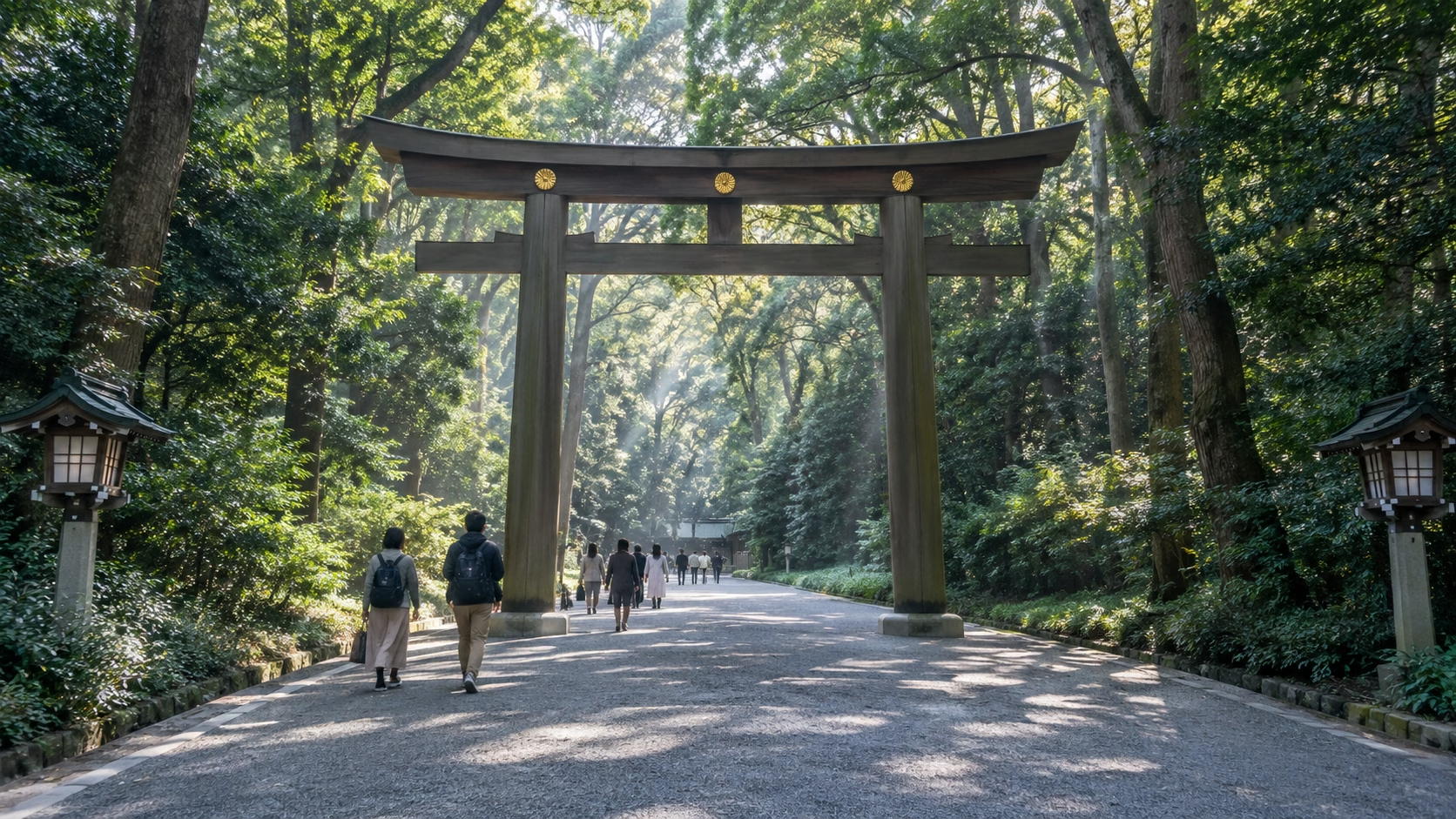
Wooden torii on the forested approach to Meiji Jingu in Tokyo
Walk Around the Imperial Palace
The Imperial Palace occupies part of the former Edo Castle site and became the imperial residence after the Meiji Restoration. Much of the inner palace is not freely open for casual sightseeing, so visitors generally explore the surrounding moats, bridges, plazas and accessible garden areas or join designated tours.[9]
The Marunouchi side pairs especially well with Tokyo Station because the route reveals an unusual combination of historic palace landscape, monumental public space and modern office architecture.
Explore the Tokyo Imperial Palace East Gardens
The East Gardens occupy former Edo Castle areas including parts of the Honmaru and Ninomaru compounds. They opened to the public in 1968 and contain stone foundations, defensive remains, landscaped spaces and seasonal vegetation.[10]
Admission is generally free, but the gardens have regular closure days and seasonal operating hours. Security procedures may include baggage inspection, so check the Imperial Household Agency’s current calendar before planning a specific visit.
Best Tokyo Neighborhoods to Explore
Harajuku
Harajuku is strongly connected with youth fashion, subcultures, character merchandise and Tokyo’s constantly changing interpretation of kawaii aesthetics. Takeshita Street represents the most concentrated version of that scene, while nearby Omotesando shifts rapidly toward international fashion, designer architecture and upscale retail.[11]
Walk Takeshita Street
Takeshita Street is narrow, busy and filled with fashion boutiques, accessories, character products, sweets and trend-oriented stores.
Visit relatively early if browsing is more important than experiencing the crowds. By afternoon, especially on weekends and holidays, the street can become extremely busy.
Explore Kawaii Culture
Kawaii literally relates to cuteness, but in contemporary Japanese visual culture it extends far beyond a single fashion style. It can appear in character design, accessories, pastel fashion, food presentation, stationery, toys and branded merchandise.
Harajuku provides a particularly visible version, although kawaii aesthetics occur across Tokyo through Sanrio, Pokémon and other character-based retail environments.
Akihabara
Akihabara developed a reputation for electronics but is now equally associated with anime, manga, games, figures, trading cards, hobby products and wider otaku culture. Multi-floor specialty stores can be highly specific, with individual floors devoted to particular franchises, collectible types or fan communities. GO TOKYO continues to describe Akihabara as a major center for manga, anime and otaku interests.[12]
Visitors interested in retro gaming should also look beyond the largest stores, as inventory and specialties vary widely.
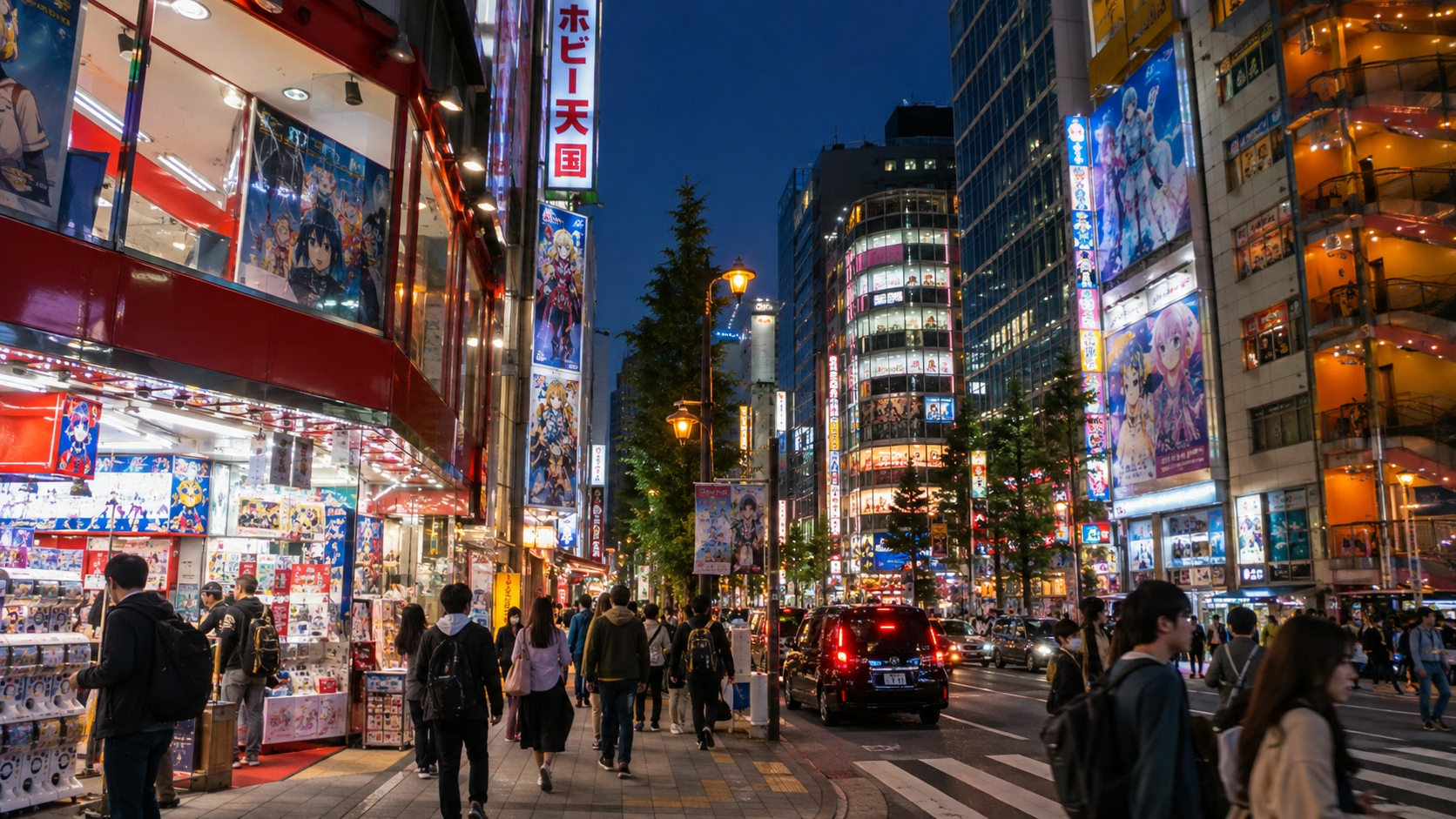
Busy Akihabara street glowing with gaming and pop-culture storefronts at night
Ginza
Ginza is Tokyo’s most prominent luxury retail district, with flagship boutiques, long-established department stores, galleries, restaurants and highly designed commercial architecture.
Its appeal is therefore broader than shopping. Ginza works especially well for travelers interested in Japanese retail culture, architecture, fine dining and Kabuki because Kabukiza Theatre is located here.[13]
Odaiba
Odaiba is a reclaimed waterfront area in Tokyo Bay characterized by large-scale entertainment complexes, shopping centers, family attractions and open views of the bay and Rainbow Bridge. Its spacious design feels very different from dense districts such as Shinjuku or Shibuya.[14]
One important update: neither teamLab Borderless nor teamLab Planets is currently in Odaiba. Borderless is at Azabudai Hills and Planets is in Toyosu.[15]
Ryogoku
Ryogoku is the district most closely associated with professional sumo in Tokyo. Ryogoku Kokugikan hosts major tournaments, and the neighborhood contains sumo-related businesses and restaurants serving chanko-style dishes associated with wrestlers.[16]
Even outside tournament periods, Ryogoku is worthwhile for travelers interested in traditional sport, Edo history and the culture surrounding sumo stables.
Yanaka
Yanaka survived many of the transformations that reshaped central Tokyo, giving it a lower-rise, residential atmosphere commonly associated with “Old Tokyo.” Temple streets, small shops, cemeteries, traditional houses and independent businesses make it more suitable for slow walking than checklist sightseeing.
Walk Yanaka Ginza
Yanaka Ginza is a neighborhood shopping street rather than a purpose-built tourist district. Small food shops, everyday retailers and local businesses are part of its appeal.
Pair it with nearby temple streets rather than visiting only for the shopping arcade. GO TOKYO’s walking material specifically highlights the Yanaka/Nezu area for travelers seeking historic neighborhood scenery.[17]
Kagurazaka
Kagurazaka is defined by sloping streets, narrow lanes, shrines, restaurants and traces of its history as an entertainment district. Today, traditional Japanese restaurants coexist with French cafés and contemporary dining.
It works well for travelers who want historic atmosphere without the scale or tourism intensity of Asakusa.
Nihonbashi
Nihonbashi has been commercially important since the Edo period and remains associated with long-established merchants, specialist food retailers, traditional goods and department stores.
Modern redevelopment means historic businesses and new towers now exist side by side, making Nihonbashi useful for understanding how Tokyo continually rebuilds around older commercial identities.
Marunouchi
Marunouchi lies between Tokyo Station and the Imperial Palace. Contemporary towers, office complexes, cafés and shopping streets face historic architecture and the palace’s broad open surroundings.
It is one of the easiest districts to incorporate into an itinerary because Tokyo Station itself is a major transport hub.[18]
Omotesando
Omotesando is both a luxury shopping avenue and an architectural walk. International fashion houses and Japanese brands occupy buildings designed to make the architecture itself part of the retail experience.
Its proximity to Harajuku makes the contrast particularly useful: Takeshita Street and Omotesando express very different sides of Tokyo fashion within walking distance.[13]
Ikebukuro
Ikebukuro is one of Tokyo’s largest commercial and entertainment districts and has become particularly important for anime and character culture. Sunshine City combines shops and attractions including Sunshine Aquarium, while nearby retailers cater to multiple fandom communities.[7]
For anime travelers, Ikebukuro complements rather than duplicates Akihabara.
Kichijoji
Kichijoji combines cafés, restaurants, independent retail and residential neighborhood atmosphere with direct access to Inokashira Park.
It is particularly effective for travelers wanting a break from central Tokyo without spending an entire day reaching the mountains. GO TOKYO identifies Kichijoji as one of the city’s popular neighborhood destinations.[7]
Best Cultural Experiences in Tokyo
Visit a Japanese Shrine
Shinto shrines are generally recognizable by torii gates and are associated with kami, the sacred beings or forces central to Shinto tradition. Buddhist temples belong to a different religious tradition and typically have different architectural and ritual conventions.[19]
Visitors do not need to be religious to enter respectfully. Avoid blocking entrances, speak quietly, follow posted rules and photograph worship spaces only where permitted.
Visit a Buddhist Temple
Temples such as Sensoji are Buddhist institutions. Visitors may encounter incense burners, statues, temple halls, pagodas, memorial spaces and Buddhist iconography.
One practical distinction from Shinto worship is that visitors generally do not clap when praying at Buddhist temples.[5]
Collect Goshuin
A goshuin is a calligraphic seal or inscription issued at many temples and shrines. Travelers normally collect them in a dedicated goshuincho book rather than treating them as ordinary souvenir stamps.
Practices differ by institution, but receiving the inscription after paying respects is generally more appropriate than entering solely to collect one.[20]
Try Omikuji
Omikuji are written fortunes available at many temples and shrines. They range from good fortune to unfavorable outcomes.
Customs surrounding unfavorable fortunes vary, including tying them at designated areas where permitted. Follow the specific site’s instructions rather than assuming every temple or shrine uses identical practices.[21]
Learn About Edo History
Tokyo was known as Edo until 1868. Under the Tokugawa shogunate, it developed into one of the world’s great urban centers before becoming the imperial capital known as Tokyo during the Meiji era.
The city’s Edo inheritance is easiest to understand when physical places are connected rather than treated separately: the Imperial Palace occupies the former Edo Castle site; Nihonbashi was a commercial center; Asakusa developed around Sensoji; and shitamachi districts were associated with merchants and artisans.
Experience Old Tokyo
“Old Tokyo” is not one precisely defined district. For visitors, the term usually describes places where traditional streets, temples, small businesses and lower-rise neighborhoods make historical layers more visible.
Asakusa is the obvious starting point, but Yanaka, Kagurazaka and Nihonbashi reveal different histories: temple district, entertainment-quarter lanes and merchant culture respectively.
Join a Tea Ceremony
A Japanese tea ceremony is much more than drinking matcha. Formal traditions can involve carefully prescribed movement, utensils, seasonal aesthetics, sweets, architecture and host–guest etiquette.
Tourist programs range from introductory demonstrations to more detailed lessons. Visitors unfamiliar with the practice should choose an experience that explicitly welcomes beginners rather than worrying about mastering etiquette in advance.
Try a Kimono Experience
Kimono-rental experiences usually involve professional dressing, accessory selection and a rental period during which visitors can walk or take photographs.
Asakusa is popular because traditional streets and Sensoji provide an appropriate visual context. Remember, however, that a rented kimono is still clothing tied to a living cultural tradition; follow instructions about how to move, sit and return garments correctly.
Take a Calligraphy Experience
Japanese calligraphy, or shodo, uses brush, ink, paper and controlled movement to produce characters expressively rather than simply legibly.
Beginner classes commonly explain basic brush pressure, stroke order and the meaning of selected kanji. The finished work can become a meaningful souvenir because the visitor has participated in the process rather than simply purchased an object.
Join a Japanese Cooking Class
Cooking classes can provide context that restaurants alone do not. Depending on the course, visitors might prepare sushi, ramen components, bento, gyoza or everyday home-style dishes while learning about ingredients, seasonality and kitchen techniques.
Market-based classes can be useful, but verify what the advertised “market tour” actually includes, especially when listings use the names Tsukiji or Toyosu loosely.
Traditional Japanese Performing Arts and Entertainment
Watch Sumo
Sumo combines athletic competition with rituals rooted in Japanese history. Professional tournaments follow a structured annual calendar, and Tokyo’s tournaments are held at Ryogoku Kokugikan.
The official Japan Sumo Association schedules six grand tournaments each year. For example, Tokyo hosted the January, May and September tournaments in 2026, with Tokyo dates also listed for those months in 2027. Exact dates should always be checked before booking flights around a tournament.[22]
Tickets range across different seating formats, including traditional box-style seating and chairs.[23]
Visit Ryogoku for Sumo Culture
Even without tournament tickets, Ryogoku makes the sport easier to understand. You may encounter sumo stables, wrestler-related businesses and chanko restaurants around the district.[16]
Stable practice visits are different from public attractions: when available, they generally require reservations and strict etiquette because visitors are observing athletes at work.
Watch Kabuki
Kabuki combines stylized acting, dramatic poses, elaborate costumes, music, dance and sophisticated stage machinery.
Kabukiza in Ginza remains Tokyo’s principal Kabuki venue. Programs vary through the year, and official scheduling shows regular performance runs rather than one permanent show.[24]
First-time visitors do not necessarily need to commit to an entire multi-act program. Kabukiza currently provides single-act ticket options for designated performances, and language-support services are available for some programs.[25]
Experience Noh
Noh is much more restrained than Kabuki. Masks, controlled movement, chanting, instrumental music and symbolic staging are central to the form.
Tokyo’s National Noh Theatre schedules Noh and Kyogen performances, including occasional programs specifically designed to help international audiences through commentary or multilingual subtitles.[26]
Watch Rakugo
Rakugo is solo comic storytelling. A performer sits on stage and uses voice, gesture and only a few simple props to portray multiple characters.
Because language is fundamental to the humor, non-Japanese speakers should look for performances or events with English interpretation, translated context or subtitling. GO TOKYO’s traditional performing-arts information highlights Rakugo alongside Noh, Kyogen and Kabuki.[27]
Best Museums and Art Experiences in Tokyo
Explore Tokyo Museums
Tokyo’s museum landscape covers archaeology, Japanese art, Western art, science, design, photography, contemporary art, animation and technology.
Do not assume all museums operate every day. Monday closures are common at some institutions, though exceptions occur around holidays and exhibitions.
Visit Tokyo National Museum
Tokyo National Museum is in Ueno Park and is one of the strongest choices for understanding Japanese art, archaeology and material culture. Its collections include Buddhist works, ceramics, sculpture, archaeological objects and art from different periods of Japanese history.
Current standard hours are generally 9:30 a.m.–5:00 p.m., with later opening on Friday and Saturday, although special exhibitions and holiday calendars can alter access.[28]
Pair it with Ueno Park rather than traveling to Ueno for the museum alone.
Explore Tokyo Art Museums
Tokyo offers very different art experiences rather than one universal “best” museum. Traditional Japanese material can be found in national institutions, major international exhibitions rotate through large museums, and contemporary art is concentrated particularly strongly around Roppongi.
The useful question is therefore not simply “Which art museum is best?” but whether you want a permanent collection, temporary blockbuster exhibition, architecture, contemporary installations or digital immersion.
Visit Mori Art Museum
Mori Art Museum in Roppongi focuses on contemporary art and regularly presents large temporary exhibitions.
Its location in a high-rise complex also makes it easy to combine art with Roppongi dining, architecture and city views. Current opening schedules generally extend later than many traditional museums, although visitors should check exhibition-specific information.[29]
Visit the National Art Center, Tokyo
The National Art Center, Tokyo differs from a conventional collection museum because it has no permanent collection. Instead, it hosts rotating exhibitions in a large building designed by architect Kisho Kurokawa.[30]
That makes it particularly suitable for travelers interested in exhibitions and architecture, but it also means the experience depends heavily on what is running during your dates.
Experience teamLab
Tokyo currently has two major teamLab experiences that travelers frequently confuse.
teamLab Borderless is at Azabudai Hills. Its digital artworks move between rooms and interact across a borderless environment.[15]
teamLab Planets is in Toyosu. It emphasizes physically immersive environments, including installations visitors move through with their bodies and, in some sections, water.[31]
Both use timed admissions, so purchasing for a specific time slot is safer than assuming spontaneous entry will be available.
Anime, Manga, Gaming, and Japanese Pop Culture
Explore Anime Culture
Anime tourism in Tokyo is distributed across several neighborhoods rather than confined to Akihabara. Akihabara has dense hobby retail; Ikebukuro has major anime and character-shopping complexes; Nakano Broadway is known for collectibles; and official character stores appear in districts including Shibuya, Tokyo Station and Nihonbashi.[12]
Discover Manga Culture
Manga appears in specialist bookstores, second-hand shops, collectible stores, exhibitions and franchise merchandise.
Visitors who only browse major new releases can miss a large part of the culture. Used shops and specialist retailers often reveal older series, out-of-print editions and highly focused fan markets.
Understand Otaku Culture
Otaku can refer to people with intense interests in particular subjects, although internationally it is commonly associated with anime, manga and gaming fandom.
Tokyo’s otaku-oriented retail reflects enormous specialization: model kits, idols, cards, figures, retro consoles, doujin works and individual series may each have dedicated stores or floors.
Explore Akihabara for Anime and Gaming
Akihabara works best when you allow time to enter buildings rather than simply photographing the street. Many of the district’s most interesting shops occupy multiple floors above street level.
Electronics remain part of the neighborhood’s identity, but anime, manga, gaming and hobby culture now form an equally important part of its visitor appeal.[12]
Explore Ikebukuro for Pop Culture
Ikebukuro provides a different fandom environment. Sunshine City and its surroundings contain character shops, anime retailers and entertainment attractions.
Pokémon Center Mega Tokyo is also located in Ikebukuro; the location reopened in August 2026 after a temporary closure.[32]
Visit Nakano Broadway
Nakano Broadway is particularly useful for collectors seeking older or specialist merchandise. Its shops can include vintage toys, figures, manga, watches and memorabilia.
It complements Akihabara because browsing often feels less focused on new-release mainstream merchandise.
Visit a Pokémon Center
Tokyo has several official Pokémon locations rather than one definitive Pokémon Center. Current official listings include Pokémon Center Tokyo DX in Nihonbashi, Mega Tokyo in Ikebukuro, Pokémon Center Shibuya and Pokémon Center Skytree Town, among others.[33]
Choose the location that fits your itinerary rather than crossing Tokyo solely to reach one branch unless it has merchandise or features you specifically want.
Visit the Ghibli Museum
The Ghibli Museum in Mitaka explores animation and the creative world associated with Studio Ghibli. Exhibitions, architectural details and original short films are designed as part of a cohesive museum experience rather than a conventional collection of movie props.[34]
Tickets require advance reservations. The museum states that tickets are not sold onsite, and its current international ticket process releases future admission through designated advance sales.[35]
The museum is about a 15-minute walk from Mitaka Station, with bus access also available.[36]
Best Food Experiences in Tokyo
Explore Tokyo Food
Tokyo can support an entire trip built around food because Japanese dining is highly specialized. A restaurant may focus almost exclusively on one category—sushi, soba, yakitori, tempura, tonkatsu, eel or a particular ramen style—rather than serving a broad national menu.
That specialization is important: eating in Tokyo is not simply about finding famous restaurants. Comparing different types of restaurants is itself part of understanding Japanese food culture.
Discover Japanese Cuisine
Japanese cuisine is built around much more than sushi. Rice, seafood, noodles, grilled foods, pickles, tofu, seasonal vegetables, broths, fermented ingredients and sweets all play important roles.
Try to vary both food type and restaurant style. A market breakfast, neighborhood izakaya, department-store food hall and formal counter meal reveal very different parts of the city’s food culture.
Eat Sushi
Tokyo offers sushi across a wide price spectrum: conveyor-belt restaurants, neighborhood counters, standing sushi, market-area restaurants and highly formal chef-led dining.
Nigiri places seafood or another topping over vinegared rice. Sashimi refers to sliced raw seafood served without sushi rice and is therefore not technically a form of sushi itself.
Toyosu and the Tsukiji area remain strongly connected with seafood, although excellent sushi is found throughout the city.[37]
Try Omakase
Omakase essentially means leaving the selection to the chef. In sushi restaurants, that normally results in a sequence chosen according to ingredients and the chef’s judgment.
It does not automatically mean “the most expensive menu,” nor does every high-end sushi restaurant use exactly the same format.
Reservations, punctuality and dietary restrictions matter more in small counter restaurants because ingredients and seating may be planned in advance.
Eat Ramen
Ramen encompasses numerous broth, seasoning and noodle styles. Common categories include shoyu, shio and miso, while tonkotsu refers to a pork-bone broth strongly associated with Kyushu. Tsukemen serves noodles separately for dipping.
Instead of looking for one universally “best ramen,” compare styles and find the type you prefer.
Visit Tokyo Ramen Street
Tokyo Ramen Street sits within the Tokyo Station complex and brings several specialist ramen shops together in one convenient location. It is especially practical on an arrival, departure or central-Tokyo sightseeing day.[18]
Popular stores can develop substantial queues at peak meal times.
Try Tempura
Tempura involves seafood, vegetables or other ingredients coated in a light batter and fried.
The experience ranges from casual tendon—tempura served over rice—to counters where pieces are fried and served one at a time so they can be eaten immediately.
Eat Yakitori
Yakitori refers to grilled chicken skewers. Restaurants may use a wide range of cuts rather than only breast or thigh meat.
Seasoning commonly involves either salt (shio) or a savory-sweet sauce (tare). Yakitori is also a frequent izakaya dish.[38]
Experience an Izakaya
An izakaya is a casual drinking-and-dining establishment where groups generally order multiple small dishes to share.
Menus may include sashimi, grilled fish, yakitori, fried foods, tofu, salads and regional specialties. Some establishments automatically serve a small appetizer called otoshi, which may carry a table charge.[38]
Shinjuku, Shibuya and many station neighborhoods contain dense concentrations of izakaya, but neighborhood establishments away from major tourist districts can be equally rewarding.
Explore Tokyo Street Food
“Street food” in Tokyo needs some context. The city does have festival stalls, market snacks and shopping-street food, but walking while eating is not universally encouraged.
Tsukiji Outer Market specifically asks visitors not to walk through the market while eating; customers should eat at the shop or in designated areas.[39]
So it is more accurate to think in terms of market snacks, festival foods and small specialty shops than assume Tokyo follows the street-food culture of some other Asian cities.
Join a Tokyo Food Tour
A good food tour provides interpretation rather than simply moving visitors from one restaurant to another. Useful guides explain ingredients, ordering conventions, neighborhood history, market etiquette and how different establishments fit Japanese dining culture.
Check group size, included food and whether the tour actually enters the markets or merely visits nearby restaurants.
Visit a Depachika
Depachika refers to the food halls typically found in department-store basements. They combine prepared meals, bento, desserts, confectionery, premium produce, packaged gifts and specialty counters.
For travelers short on time, depachika offer an efficient way to see the presentation, seasonality and gift culture surrounding Japanese food retail. Ginza, Shinjuku and major station districts provide multiple examples.[13]
Try Japanese Sweets
Japanese sweets range from traditional wagashi designed around seasonal themes to mochi, dorayaki, bean-paste confections and matcha desserts.
Seasonality matters: sakura motifs in spring, chestnut and sweet-potato sweets in autumn, and New Year specialties are not merely decoration but part of how Japanese confectionery reflects the calendar.
Explore Tokyo Cafes
Tokyo café culture ranges from specialty coffee shops to traditional kissaten, dessert cafés, design-focused cafés and heavily themed character establishments.
A kissaten can provide a particularly interesting contrast with newer minimalist coffee bars because it represents an older Japanese café tradition.
Best Food Markets in Tokyo
Visit Tsukiji Outer Market
Tsukiji’s inner wholesale market relocated to Toyosu in 2018, but the Tsukiji Outer Market remains active. GO TOKYO describes roughly 460 businesses selling seafood, prepared foods, kitchen tools and specialty ingredients. The liveliest visitor period is generally in the morning through early afternoon.[1]
Tsukiji still makes sense for a visitor who wants a compact, energetic food-shopping district and easy snack-based exploration.
Respect market etiquette: professional buyers may be working, passages are narrow, bargaining is not customary, and eating while walking is discouraged.[39]
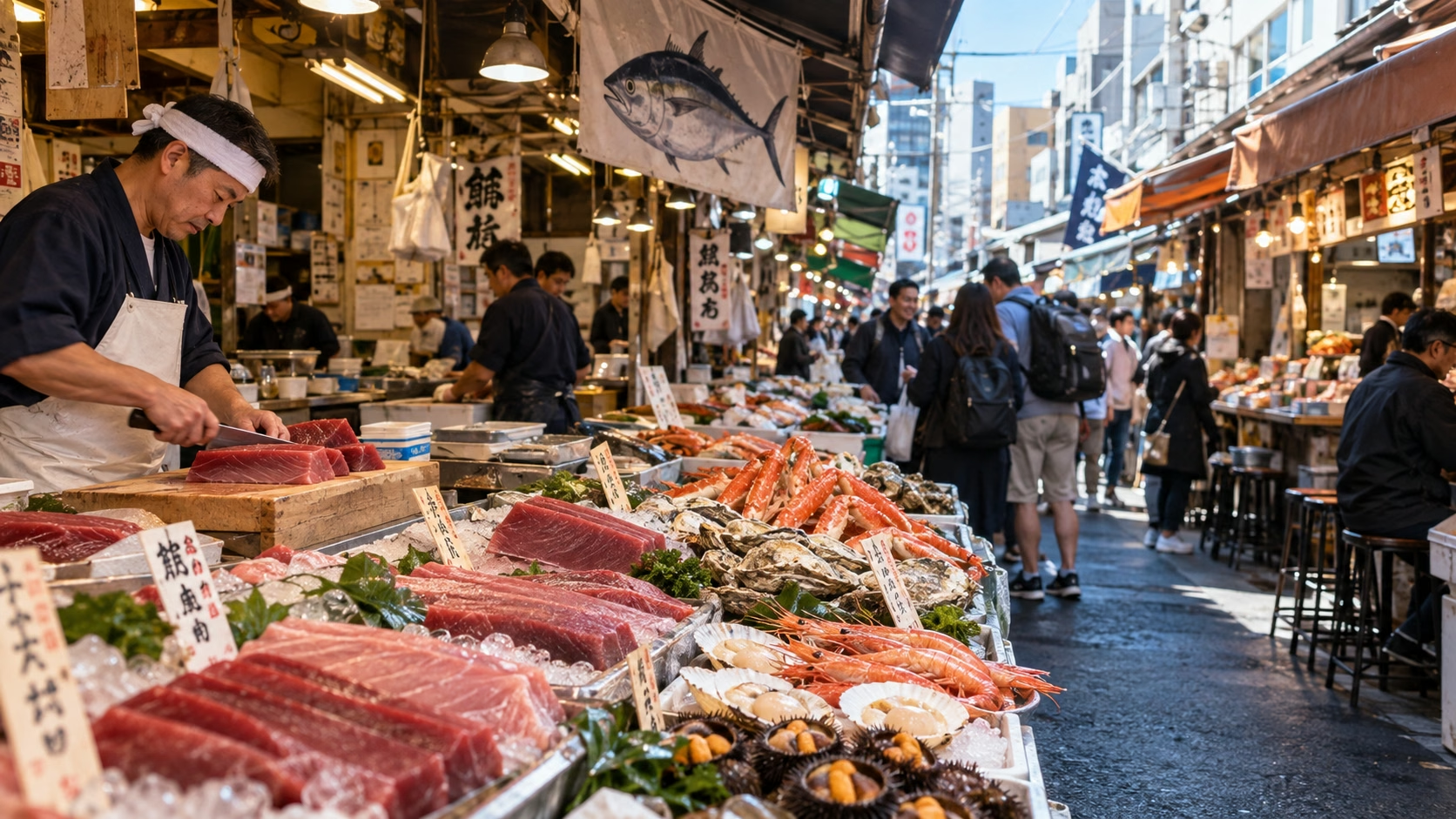
Seafood vendor preparing tuna beside fresh shellfish at a busy Tokyo market
Explore Toyosu Market
Toyosu is Tokyo’s functioning large-scale wholesale market complex, which opened in 2018 after wholesale operations moved from Tsukiji.
Visitors can observe parts of the market through designated public areas, eat at restaurant zones and explore related retail facilities. Tuna auctions occur here rather than at Tsukiji; a closer viewing area may require advance application, while other observation areas provide more general access.[40]
Tsukiji vs. Toyosu
Choose Tsukiji for dense food stalls, specialist retailers, breakfast and a lively traditional market-neighborhood atmosphere.
Choose Toyosu if your interest is the functioning wholesale seafood system, tuna auctions, modern market infrastructure and seafood restaurants connected with the relocated market.
Neither completely replaces the other because they now serve different visitor purposes.[1]
Shopping in Tokyo
Tokyo Shopping Overview
Tokyo’s retail geography is highly specialized. Ginza emphasizes luxury and department stores; Harajuku mixes youth trends with subcultures; Omotesando concentrates upscale fashion and architectural flagships; Akihabara specializes in electronics and hobby culture; and Nihonbashi combines department stores with long-established Japanese merchants.[13]
Luxury Shopping in Ginza
Ginza is the strongest district for high-end international brands, Japanese luxury retail and major department stores.
Even non-shoppers may appreciate the district because commercial buildings are treated as architectural statements and food floors make department stores destinations in their own right.
Fashion Shopping in Harajuku
Harajuku’s strength is contrast. Takeshita Street emphasizes youth trends, accessories and character-oriented products, while surrounding side streets support independent boutiques and more experimental fashion.
Shop Along Omotesando
Omotesando shifts toward international fashion houses, Japanese lifestyle brands and highly designed retail buildings.
Walk it rather than treating individual shops as isolated destinations; the avenue’s architecture is part of the experience.
Electronics and Collectibles in Akihabara
Akihabara remains a useful destination for electronics, but modern visitors are just as likely to come for gaming hardware, figures, model kits, anime merchandise, trading cards or retro equipment.[12]
Traditional Shopping in Nihonbashi
Nihonbashi provides a good setting for Japanese gifts, specialty foods, crafts and department-store culture.
Its long commercial history makes it particularly appropriate for travelers wanting retail that feels connected to Tokyo’s merchant heritage rather than only global brands.
Tokyo Nightlife and Evening Activities
Tokyo Nightlife Overview
Tokyo nightlife includes far more than clubs. Izakaya, cocktail bars, live music, karaoke, observation decks, late-night restaurants, illuminated landmarks and waterfront walks all fit naturally into an evening itinerary.
Rail service does not generally operate continuously overnight, so travelers staying late should check their final train rather than assume normal daytime frequency continues all night.
Nightlife in Shinjuku
Shinjuku is particularly effective for bar-hopping and casual evening dining because entertainment areas, small bars, karaoke and restaurants are concentrated around a major station.
The district changes noticeably after dark as illuminated signs and nightlife replace the more business-oriented daytime atmosphere.
Nightlife in Shibuya
Shibuya has a younger nightlife profile with bars, music venues and clubs alongside late-night restaurants.
Seeing Shibuya Crossing after dark and then moving into nearby dining or nightlife avoids unnecessary travel to another district.
Evening Experiences Around Tokyo Bay
The Tokyo Bay waterfront offers a different evening from Shinjuku or Shibuya: more open space, bridge illumination, reflections on the water and skyline photography.
Odaiba is one of the easiest locations from which to see Rainbow Bridge as part of the broader bay landscape.[14]
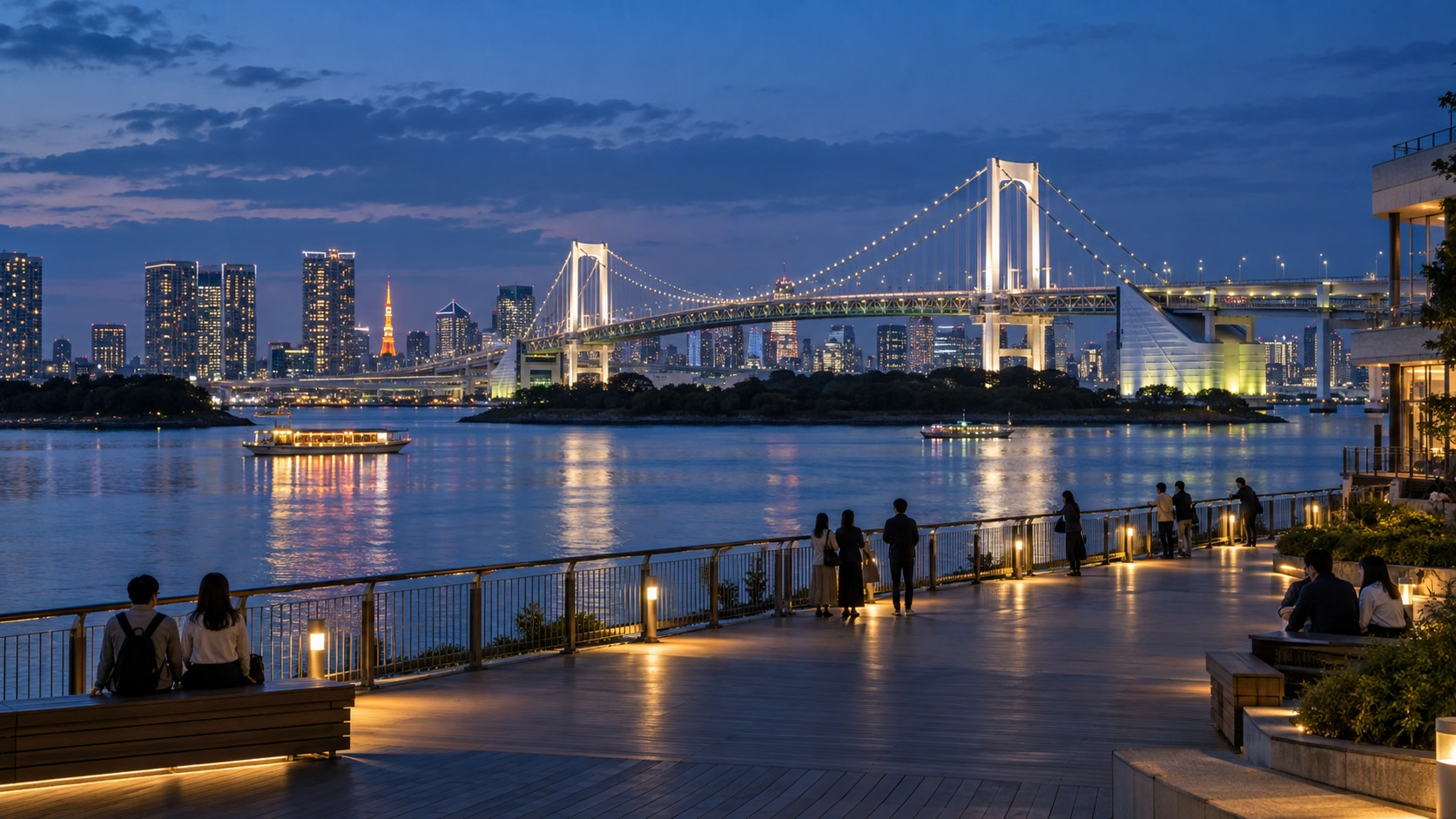
Illuminated Rainbow Bridge and Tokyo skyline reflected across the bay at blue hour
Waterfront Activities and Tokyo Bay
Explore Tokyo Bay
Tokyo Bay reveals the scale of Tokyo’s modern waterfront development. Reclaimed land, transport infrastructure, parks and entertainment complexes contrast strongly with historic eastern neighborhoods.
Cruises can also provide a different geographic understanding of the city by linking waterways and districts that seem disconnected on a train map.
See Rainbow Bridge
Rainbow Bridge links central waterfront areas with Odaiba and is one of the defining structures of Tokyo Bay.
It is especially photogenic from Odaiba after dark, when the bridge, bay and urban skyline appear within the same view.[14]
Spend a Day in Odaiba
Odaiba works particularly well for families or travelers wanting an easier-paced day involving indoor attractions, shopping, waterfront walks and dining.
Do not schedule teamLab there based on older guides: the current teamLab locations most travelers seek are Azabudai Hills and Toyosu.[15]
Tokyo Architecture and Urban Design
Explore Tokyo Architecture
Tokyo’s architecture is compelling partly because uniformity is rare. Traditional temple compounds, wooden neighborhood buildings, early-20th-century structures, postwar development, narrow mixed-use buildings and experimental contemporary architecture overlap continuously.
The city is therefore best explored through contrasts rather than a single architectural style.
Architecture in Ginza
Ginza’s international and Japanese flagship stores frequently use distinctive façades and unconventional forms to compete visually within one of the country’s most valuable commercial areas.
Walking rather than traveling shop-to-shop lets those relationships become clearer.
Architecture in Omotesando
Omotesando is one of Tokyo’s strongest architecture walks because major fashion brands commissioned prominent architects to design buildings as part of their identities.
Combine the avenue with Harajuku to see how luxury architectural branding and grassroots street culture occupy neighboring urban spaces.
Marunouchi and Tokyo Station
Tokyo Station’s historic Marunouchi-side architecture faces a broad plaza surrounded by contemporary towers.
The result illustrates an important Tokyo pattern: preservation and reconstruction of symbolic historic architecture occurring alongside large-scale redevelopment.[18]
Visit Tokyo Station and Central Tokyo
Explore Tokyo Station
Tokyo Station is both transportation infrastructure and a destination. Within and around the complex are restaurants, souvenir shops, character stores, underground shopping areas and Tokyo Ramen Street.
Its complexity means “meeting at Tokyo Station” is not sufficiently specific. Allow time to locate exits, platforms and underground sections.
Eat at Tokyo Ramen Street
Tokyo Ramen Street lets visitors compare specialist ramen establishments without traveling between neighborhoods.
It is particularly useful if Tokyo Station is already part of your journey rather than something worth crossing the city for solely to eat ramen.[18]
Walk from Tokyo Station to Marunouchi
Exit toward Marunouchi rather than the Yaesu side to experience the station’s historic façade and broad plaza.
From there, modern towers, cafés and shopping areas lead naturally toward the Imperial Palace.
Continue to the Imperial Palace
Tokyo Station → Marunouchi → Imperial Palace surroundings → East Gardens is one of the most geographically efficient central-Tokyo sightseeing sequences.
Remember to check East Gardens closure dates before making them the endpoint of the route.[10]
Parks, Gardens, and Nature in Tokyo
Best Tokyo Parks
Tokyo’s green spaces serve different purposes. Large public parks such as Yoyogi emphasize recreation and open space, while formal gardens such as Hama-rikyu preserve carefully designed landscapes and historical features.[41]
That distinction matters when planning. Choose a park for picnics, people-watching or family recreation; choose a garden when landscaping, seasonal plants and historical design are the priority.
Visit Ueno Park
Ueno Park combines green space with some of Tokyo’s most important cultural institutions. Tokyo National Museum, Ueno Zoo and several other museums are concentrated around the park, allowing an entire day to be built without extensive transportation.[42]
Visit Ueno Zoo
Ueno Zoo is particularly practical for families already spending time around Ueno Park.
Rather than trying to combine the zoo with several large museums in one rushed day, select attractions according to the interests and stamina of the group.[43]
Relax in Yoyogi Park
Yoyogi Park provides open lawns, paths and recreational space close to Meiji Jingu and Harajuku.
Because it sits directly beside several major attractions, it is easy to include without creating a separate park day.[44]
Visit Shinjuku Gyoen
Shinjuku Gyoen combines Japanese, English landscape and French formal garden influences. It contains hundreds of cherry trees and is one of Tokyo’s most prominent blossom-viewing locations.[45]
Unlike many public parks, it is a managed garden with admission rules; alcohol and some recreational activities are prohibited.
Walk Through Hama-rikyu Gardens
Hama-rikyu is a former feudal garden whose landscape includes a tidal pond influenced by Tokyo Bay and a tea house within the garden.[46]
The juxtaposition of landscaped Edo-period design and surrounding skyscrapers is part of what makes the garden distinctive.
Visit Inokashira Park
Inokashira Park lies beside Kichijoji and includes a large pond, walking paths, boating and seasonal scenery.
It is also close to the Ghibli Museum, making Kichijoji, the park and museum a logical geographic combination if museum tickets have been secured.[47]
Explore Tokyo Gardens
Formal gardens are among Tokyo’s best places for understanding seasonal aesthetics. Flowering trees, irises, autumn foliage, ponds and teahouses change how the same garden looks across the year.
Allow enough time to sit and observe rather than treating gardens as another fast photo stop.
Outdoor Adventures and Hiking
Tokyo Hiking
The word “Tokyo” often evokes dense urban neighborhoods, but Tokyo Metropolis extends far west into mountainous terrain.
That makes genuine hiking possible without leaving the administrative region. Mount Takao provides accessible trails close to the city, while Okutama offers more extensive mountain and river environments.[48]
Hike Mount Takao
Mount Takao is one of the easiest mountain excursions from central Tokyo. Visitors can choose hiking routes or use cable-car/chairlift infrastructure for part of the ascent.
Trail 1 passes important sites including Yakuo-in temple and is commonly used by first-time visitors.[49]
Weather, footwear and seasonal crowding still matter; “easy to access” should not be confused with “no preparation required.”
Explore Okutama
Okutama offers forests, rivers, mountains, hiking routes, caves and hot-spring experiences roughly two hours from central Shinjuku depending on the destination and service.[50]
Routes vary dramatically in difficulty. Some are recreational valley walks, while higher mountain routes can involve long days, steep terrain or overnight planning. Mount Kumotori, for example, reaches 2,017 meters and should not be treated as a casual city hike.[51]
Check the Okutama Visitor Center for current trail conditions and wildlife notices before attempting more serious routes.[52]
Best Family Activities in Tokyo
Visit Tokyo Disneyland
Tokyo Disneyland follows the familiar Disney castle-park model with themed lands, rides, entertainment, characters and dining.
Although branded “Tokyo,” Tokyo Disney Resort is in Urayasu, Chiba Prefecture. Maihama Station is approximately 15 minutes by train from Tokyo Station under normal conditions, making it an easy day trip from central Tokyo.[53]
Admission is date-specific, and tickets are sold for scheduled dates rather than functioning as unrestricted entry.[54]
Visit Tokyo DisneySea
Tokyo DisneySea sits within the same resort but uses ports, maritime environments and original themed areas rather than duplicating Disneyland’s design.
The parks are substantial enough that trying to cover both fully on one normal sightseeing day is unrealistic for most visitors.[55]
Compare Tokyo Theme Parks
For Disney characters and large-scale rides, choose the Disney resort.
For Sanrio characters and an entirely indoor experience, Sanrio Puroland in Tama City offers a substantially different kind of attraction.[56]
Families mainly interested in anime or game characters may get more value from Pokémon stores, Sunshine City or other franchise attractions than from a conventional theme park.
Visit Sanrio Puroland
Sanrio Puroland is an indoor character theme park associated with Hello Kitty and other Sanrio characters.
Because it is indoors, it can be particularly useful during very hot, wet or cold weather, though operating schedules vary and should be checked for the planned date.[56]
Visit Sunshine Aquarium
Sunshine Aquarium is part of Sunshine City in Ikebukuro and combines indoor marine exhibits with outdoor components high within an urban complex.[57]
It pairs naturally with Pokémon Center Mega Tokyo and other Ikebukuro family attractions.
Visit Ueno Zoo
Ueno Zoo works best when integrated into a Ueno Park day rather than treated as geographically separate.[43]
Visit a Pokémon Center
Because Tokyo has multiple Pokémon Center locations, families can usually fit one into an existing neighborhood itinerary instead of dedicating a half-day solely to the store.[33]
Visit Ghibli Museum
The Ghibli Museum can appeal to both children and adults, but it requires more advance planning than most family attractions because tickets must be reserved before arrival.[35]
Seasonal Things to Do in Tokyo
See Cherry Blossoms
Cherry blossom season is one of Tokyo’s most anticipated seasonal periods, but exact bloom timing changes from year to year.
For 2026, the official Tokyo tourism information referenced flowering around March 21, while late March through early April is a more general planning window. Full bloom commonly follows initial flowering after roughly a week, though weather can accelerate or delay the process.[58]
For a future trip, rely on that year’s forecast rather than copying the previous year’s dates.
Experience Hanami
Hanami means flower viewing and is strongly associated with gathering beneath cherry blossoms.
Hanami can mean a picnic, a walk under trees, a garden visit or simply stopping to appreciate seasonal flowers. Crowded parks require extra consideration for local rules, rubbish and reserved spaces.
Hanami at Ueno Park
Ueno is famous for lively blossom viewing and can become extremely crowded during peak bloom.
Choose it for atmosphere rather than tranquility.
Hanami at Yoyogi Park
Yoyogi’s open lawns support a more social picnic-oriented experience and are easy to combine with Harajuku and Meiji Jingu.[44]
Hanami at Shinjuku Gyoen
Shinjuku Gyoen offers a more controlled landscaped setting and contains many cherry trees across different varieties.[45]
Its rules differ from open public parks, so confirm current entry and reservation requirements during peak periods.
See Autumn Leaves
Tokyo’s autumn color typically arrives much later than in northern Japan. Current GO TOKYO seasonal guidance commonly places central-city foliage from around mid-November into early December, depending on location and annual temperatures.[59]
Autumn at Mount Takao
Higher elevation and forested slopes make Mount Takao particularly popular for autumn hiking, which also means trails and transport can become crowded during peak color.
Autumn in Tokyo Gardens
Formal gardens provide more controlled compositions of Japanese maple, ginkgo, ponds and bridges, making them particularly suitable for photography.
Some gardens occasionally schedule seasonal evening illuminations, but these are event-specific rather than guaranteed annual operating features.
Festivals and Traditional Events
Tokyo Festivals
Tokyo’s festivals range from neighborhood shrine events to major processions attracting large crowds.
Dates, routes and participation rules can change, so festivals are one area where travelers should search by their exact travel dates rather than rely on a general annual guide.
Understand Matsuri
Matsuri is a broad Japanese term for festivals and is frequently connected with Shinto shrines, local communities and seasonal observances.
Depending on the festival, visitors may see portable shrines known as mikoshi, processions, music, performances and food stalls.
Participation rules vary. Watching respectfully does not mean visitors can automatically join a procession or handle sacred objects.
Experience Traditional Festivals in Asakusa
Asakusa is particularly appropriate for travelers interested in traditional festival culture because its temple and shrine landscape remains closely tied to major neighborhood events.
If a festival coincides with your visit, expect transportation and pedestrian conditions to be substantially busier than normal.
Suggested Tokyo Itineraries
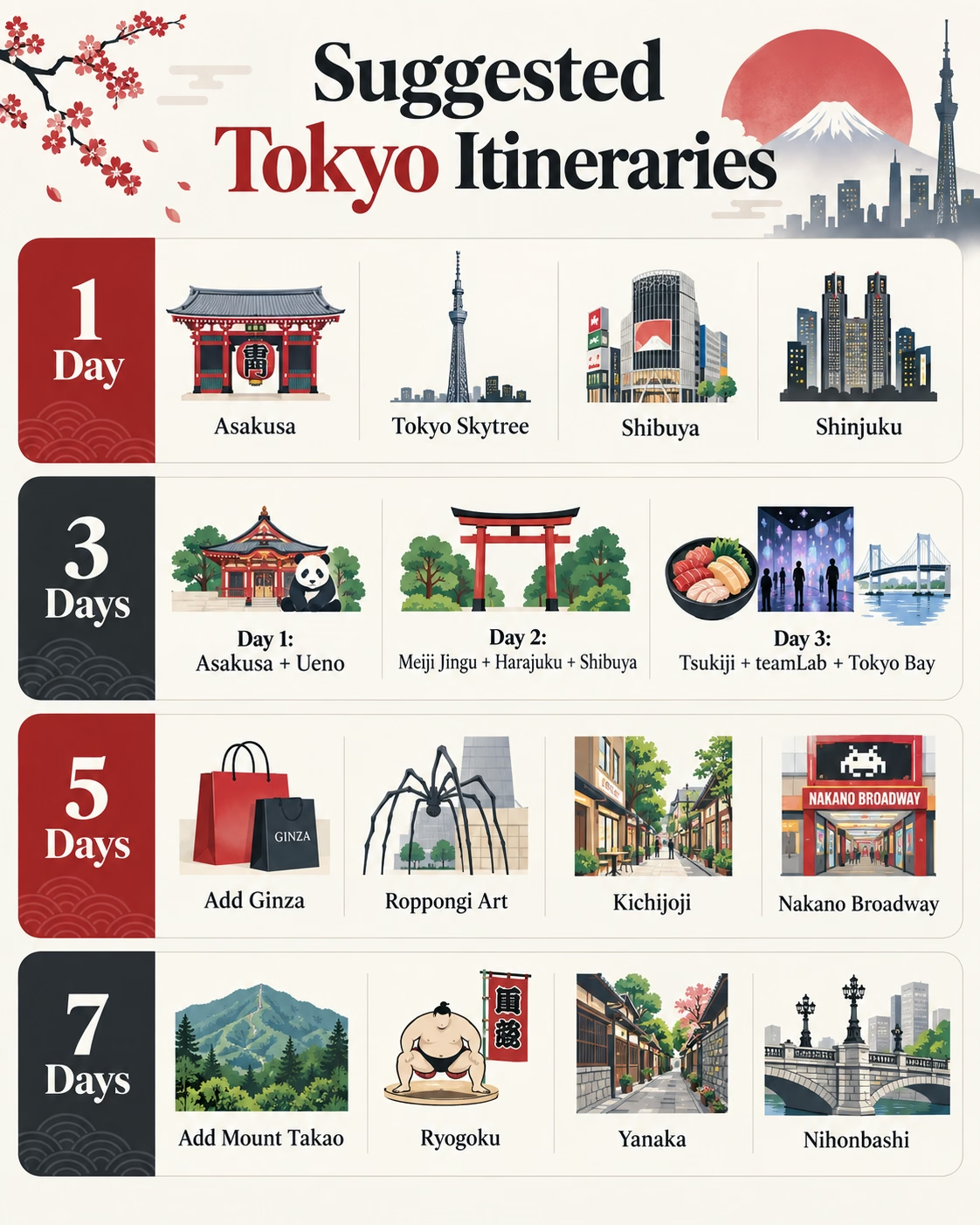
Tokyo itinerary infographic comparing one-day, three-day, five-day, and seven-day trip plans
One-Day Tokyo Itinerary for First-Time Visitors
Trying to cover every famous attraction in one day creates more transit than experience.
A workable high-energy route is Asakusa and Sensoji in the morning → Tokyo Skytree area around midday → Shibuya late afternoon → Shinjuku in the evening.
It is still a long day, but the sequence provides traditional eastern Tokyo, a skyline experience and two major modern districts.
Two-Day Tokyo Itinerary
Day 1: Historic and Central Tokyo
Start in Asakusa and Sensoji, continue to Ueno for the park or Tokyo National Museum, then move to Tokyo Station and Marunouchi. Finish with the Imperial Palace surroundings if daylight and garden opening hours allow.
Day 2: Modern Tokyo
Begin at Meiji Jingu, then walk through Harajuku and Takeshita Street toward Omotesando. Continue to Shibuya for the crossing and an observation deck, then finish in Shinjuku.
Three-Day Tokyo Itinerary
Day 1: Traditional Tokyo
Asakusa, Sensoji and neighboring historic streets should anchor the day. Add a tea ceremony or kimono experience only if it does not force you to rush the neighborhood itself.
Day 2: Modern and Pop-Culture Tokyo
Explore Harajuku and Shibuya, then devote the later part of the day to Akihabara.
Visitors whose main interest is anime may prefer replacing some general sightseeing with Ikebukuro or Nakano.
Day 3: Food and Art
Begin at Tsukiji Outer Market, then visit either teamLab Planets in Toyosu or teamLab Borderless at Azabudai Hills.
If you choose Planets, the Toyosu/Tokyo Bay geography makes waterfront exploration convenient. Do not automatically schedule “teamLab + Odaiba” from an older itinerary without checking which teamLab museum you actually booked.[1]
Five-Day Tokyo Itinerary
With five days, avoid simply adding more major landmarks. Use the extra time for contrast.
Add Ginza and Kabukiza; spend part of a day around Roppongi’s art museums; and devote another half-day to Kichijoji, Inokashira Park or Nakano Broadway.
This slower pacing gives neighborhood exploration enough room to become meaningful.
Seven-Day Tokyo Itinerary
Seven days makes western Tokyo or deeper neighborhood exploration realistic.
Add a Mount Takao day trip, or choose Okutama if you want more serious nature. Use another day for Ryogoku and sumo culture, then explore quieter historic districts such as Yanaka, Nihonbashi and Kagurazaka.
Tokyo Itineraries by Traveler Interest
Tokyo for Food Lovers
Build around contrast rather than restaurant prestige alone: Tsukiji breakfast, sushi, ramen, tempura, yakitori, an izakaya evening, a depachika visit and Japanese sweets.
A cooking class or food tour can add cultural context that a restaurant checklist cannot.
Tokyo for History Lovers
Prioritize Sensoji and Asakusa, the Imperial Palace/East Gardens, Tokyo National Museum, Nihonbashi and Yanaka.
Together, these places help connect Edo-period political power, merchant culture, religion and the development of modern Tokyo.
Tokyo for Anime and Manga Fans
Use Akihabara for dense hobby shopping, Ikebukuro for character and fandom retail, Nakano Broadway for older collectibles, and one or more Pokémon Centers for official merchandise.
Add the Ghibli Museum only after securing advance tickets.
Tokyo for Art and Design Lovers
Combine Mori Art Museum, the National Art Center, one teamLab venue, Omotesando architecture and Ginza.
This gives you conventional exhibitions, contemporary art, digital installations and architecture rather than five versions of the same museum experience.
Tokyo for Families
Tokyo Disneyland or DisneySea can occupy a full day. Within Tokyo itself, Sunshine Aquarium, Pokémon Centers, Sanrio Puroland, Ueno Zoo and the Ghibli Museum suit different age groups and interests.
Base the choice on the child’s interests rather than assuming every family needs to visit every character attraction.
Tokyo for Nature Lovers
Start with accessible green spaces such as Shinjuku Gyoen, Hama-rikyu and Inokashira Park.
Then add Mount Takao for a straightforward mountain day or Okutama for a more substantial nature excursion.
Tokyo for Nightlife Travelers
Shibuya and Shinjuku provide dense nightlife without extensive travel between venues.
For a quieter evening, substitute an observation deck, illuminated Tokyo Tower or the Tokyo Bay waterfront.
How to Combine Tokyo Experiences by Geographic Cluster
Tokyo is easier to explore when nearby attractions are grouped into the same sightseeing block. The following clusters reduce unnecessary cross-city travel while preserving variety.
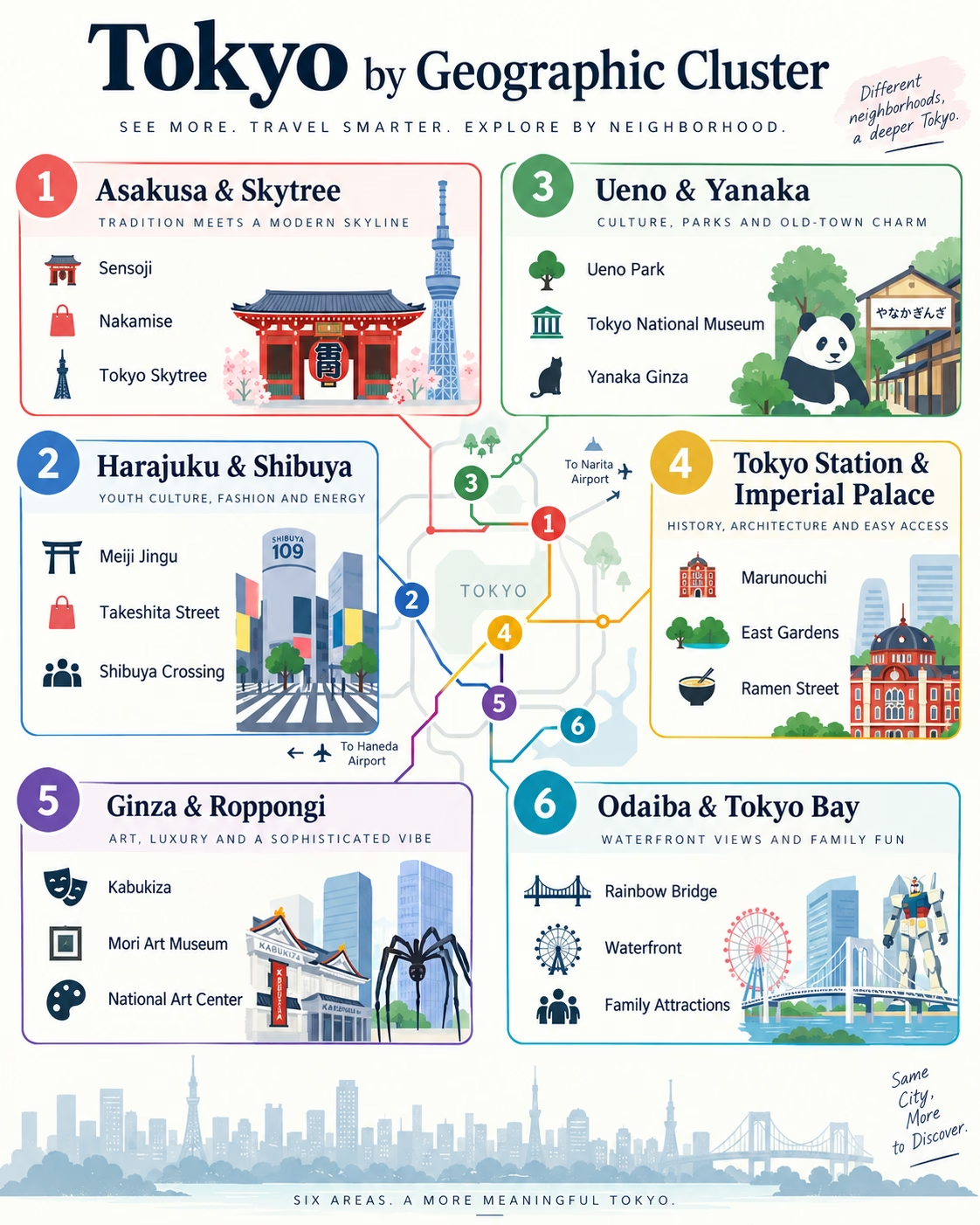
Tokyo geographic clusters showing six practical sightseeing areas and their key attractions
Asakusa Cluster
Combine Sensoji, Nakamise and surrounding Asakusa streets with omikuji, goshuin and local food shops. Continue toward the Sumida River and Tokyo Skytree if you want an observation deck.
Harajuku and Shibuya Cluster
Meiji Jingu → Yoyogi Park → Harajuku/Takeshita Street → Omotesando → Shibuya is one of Tokyo’s most efficient multi-theme walking areas.
It moves naturally from shrine and forest to youth fashion, architecture and one of Tokyo’s busiest contemporary districts.
Ueno and Yanaka Cluster
Visit Tokyo National Museum or another Ueno museum, cross through Ueno Park, then continue north toward Yanaka and Yanaka Ginza.
The transition from national institutions to quiet residential streets makes this one of the best routes for understanding Tokyo beyond its commercial centers.
Tokyo Station and Imperial Palace Cluster
Tokyo Station → Tokyo Ramen Street → Marunouchi → Imperial Palace surroundings → East Gardens.
The East Gardens’ closure calendar should determine which direction you travel, rather than assuming access every day.[10]
Ginza Cluster
Combine department stores, commercial architecture and Kabukiza. Add sushi, omakase or a depachika meal depending on budget and reservation availability.
Roppongi Art Cluster
Mori Art Museum and the National Art Center can form the core of an art-focused half- or full day, with architecture and restaurants in between.[29]
Akihabara and Anime Cluster
Keep this cluster focused: electronics, anime, manga, gaming and collectibles are all concentrated enough that enthusiasts can easily spend half a day or longer inside stores.
Ikebukuro Entertainment Cluster
Sunshine City, Sunshine Aquarium, Pokémon Center Mega Tokyo and surrounding anime retailers work naturally together.[57]
Odaiba and Tokyo Bay Cluster
Use Odaiba for waterfront views, entertainment complexes, Rainbow Bridge scenery and Tokyo Bay.
Again, teamLab should not automatically be included here: Planets is in Toyosu and Borderless is in Azabudai Hills.[31]
Kichijoji and Western Tokyo Cluster
Combine Kichijoji with Inokashira Park. Add the Ghibli Museum if you already have timed admission.
Nakano Broadway can fit before or afterward for travelers continuing along western Tokyo’s rail corridor.
How to Prioritize Things to Do in Tokyo
Essential First-Visit Experiences
For a first trip, prioritize variety over quantity.
Shibuya, Shinjuku, Asakusa/Sensoji, Meiji Jingu and one major viewpoint together demonstrate Tokyo’s modern commercial life, historic religious culture and enormous urban scale.
Add Japanese food and at least one unstructured neighborhood walk rather than using every available hour for ticketed attractions.
Experiences for a Second Visit
A return trip is a good time for Yanaka, Kagurazaka, Nihonbashi, Ryogoku and Kichijoji.
You can also explore formal gardens, Rakugo, calligraphy or smaller cultural experiences because you no longer need to devote as much time to the city’s headline landmarks.
Experiences for Longer Stays
Longer stays make Mount Takao, Okutama, cooking classes, Noh, seasonal festivals and deeper neighborhood exploration practical.
These experiences tend to require more scheduling or travel, but they reveal aspects of Tokyo that a three-day sightseeing trip cannot.
Frequently Asked Questions About Things to Do in Tokyo
What are the best things to do in Tokyo for first-time visitors?
A strong first trip combines Asakusa and Sensoji, Meiji Jingu, Shibuya, Shinjuku and one major skyline viewpoint such as Tokyo Skytree, Tokyo Tower or Shibuya Sky.
The goal is to experience contrasting sides of Tokyo rather than simply visit the largest number of landmarks.
What are the best free things to do in Tokyo?
Many neighborhood walks cost nothing, as do visits to numerous shrines and temple grounds. Meiji Jingu, Yoyogi Park, city architecture districts, Tokyo Bay viewpoints and neighborhoods such as Yanaka can all be explored without normal admission charges.[44]
Some gardens and observation decks charge admission, so distinguish “park” from “formal garden” when budgeting.
What are the best cultural things to do in Tokyo?
Shrines and Buddhist temples provide the easiest introduction. For deeper participation, consider tea ceremony, kimono, calligraphy or Japanese cooking experiences.
Traditional performing arts add another layer: sumo, Kabuki, Noh and Rakugo each represent very different performance traditions.
What are the best things to do in Tokyo at night?
Shinjuku and Shibuya are the most obvious nightlife districts. Izakaya dining, karaoke, observation decks, Tokyo Tower and Tokyo Bay provide alternatives for travelers who are not interested in clubs or bars.
What are the best things to do in Tokyo with children?
Tokyo Disneyland, DisneySea, Sanrio Puroland, Ueno Zoo, Sunshine Aquarium, Pokémon Centers and the Ghibli Museum are major options.
Remember that Disney Resort is in Chiba and usually deserves its own day, while Ghibli Museum requires advance reservation.[53]
What are the best food experiences in Tokyo?
Sushi, ramen, tempura, yakitori and izakaya dining provide a strong foundation.
Add Tsukiji or Toyosu, a depachika, Japanese sweets and perhaps a food tour or cooking class if you want to understand ingredients and dining culture rather than simply collect restaurant names.
Where can visitors experience traditional Tokyo?
Asakusa is the easiest introduction, especially around Sensoji. Yanaka provides a quieter residential and temple-area experience, Nihonbashi reflects historic commerce, and Kagurazaka offers traditional lanes and restaurants.
The Imperial Palace and East Gardens connect the modern city directly with the former Edo Castle site.[10]
Where can visitors experience anime and manga culture?
Akihabara, Ikebukuro and Nakano Broadway provide the strongest concentrations.
Official character destinations such as Pokémon Centers are spread across several districts, while the Ghibli Museum is in Mitaka and requires advance booking.[12]
What outdoor activities are available in Tokyo?
Within central Tokyo, options include parks, formal gardens, boating and long neighborhood walks.
For true hiking, Mount Takao provides an accessible day trip, while Okutama offers more extensive mountain terrain and routes requiring greater preparation.[48]
What are the best seasonal things to do in Tokyo?
Spring cherry blossoms and hanami are the best-known seasonal experiences. Autumn brings foliage to gardens and mountains, while summer and other periods feature numerous neighborhood matsuri.
Exact blossom, foliage and festival dates should always be checked for the year of travel rather than treated as fixed annual dates.[58]
Conclusion: Building the Ideal Tokyo Experience
There is no single correct checklist of things to do in Tokyo. A food-focused traveler, an anime fan, a family with children and someone interested in Japanese history can spend the same number of days in the city and reasonably build completely different itineraries.
For a first trip, combine a few major Tokyo attractions with neighborhood exploration. Experience Shibuya and Shinjuku, but also walk Asakusa or Yanaka. Visit a skyscraper observation deck, then spend time in a shrine forest or traditional garden. Eat sushi or ramen, but also explore an izakaya, depachika or neighborhood café. If anime and manga matter to you, give Akihabara or Ikebukuro enough time rather than squeezing them into an hour between unrelated attractions.
Most importantly, organize your Tokyo itinerary geographically. Asakusa and Skytree belong naturally together; Meiji Jingu, Harajuku, Omotesando and Shibuya form another strong cluster; Tokyo Station, Marunouchi and the Imperial Palace fit together; and Kichijoji, Inokashira Park and the Ghibli Museum make sense as a western-Tokyo day.
Tokyo becomes easier to understand when its attractions are treated as relationships rather than isolated destinations: Sensoji explains Asakusa; Meiji Jingu provides a counterpoint to Harajuku; Ryogoku gives context to sumo; Toyosu explains the modern wholesale seafood trade; Nihonbashi preserves Tokyo’s commercial history; and Mount Takao and Okutama demonstrate that Tokyo is not purely an urban destination.
That coexistence—Edo history and contemporary architecture, temples and digital art, formal gardens and neon districts, highly traditional cuisine and pop culture—is what makes Tokyo worth exploring beyond its headline sights.
Sources
- GO TOKYO – https://www.gotokyo.org/en/spot/65/ ↩
- GO TOKYO – https://www.gotokyo.org/en/destinations/western-tokyo/shibuya/index.html ↩
- GO TOKYO – https://www.gotokyo.org/en/spot/78/index.html ↩
- GO TOKYO – https://www.gotokyo.org/en/spot/1749/index.html ↩
- GO TOKYO – https://www.gotokyo.org/en/plan/customs-manners/index.html ↩
- Tokyo Skytree – https://www.tokyo-skytree.jp/enjoy/reservation010/ ↩
- GO TOKYO – https://www.gotokyo.org/en/see-and-do/attractions/ ↩
- GO TOKYO – https://www.gotokyo.org/en/spot/76/index.html ↩
- GO TOKYO – https://www.gotokyo.org/en/story/guide/a-noble-look-at-tokyos-imperial-palace-a-guide-to-the-royal-residence/ ↩
- Imperial Household Agency – https://www.kunaicho.go.jp/e-event/higashigyoen/higashigyoen.html ↩
- GO TOKYO – https://www.gotokyo.org/en/best-attractions/index.html ↩
- GO TOKYO – https://www.gotokyo.org/en/story/guide/anime-and-manga/index.html ↩
- GO TOKYO – https://www.gotokyo.org/en/see-and-do/shopping/index.html ↩
- GO TOKYO – https://www.gotokyo.org/en/destinations/southern-tokyo/odaiba/ ↩
- teamLab – https://www.teamlab.art/e/tokyo/ ↩
- GO TOKYO – https://www.gotokyo.org/en/new-and-now/new-and-trending/260113/topics.html ↩
- GO TOKYO – https://www.gotokyo.org/en/story/walks-and-tours/index.html ↩
- GO TOKYO – https://www.gotokyo.org/en/destinations/central-tokyo/tokyo-station-and-marunouchi/index.html ↩
- Japan National Tourism Organization – https://www.japan.travel/en/guide/shrine-and-temple-traditions/ ↩
- Japan National Tourism Organization – https://www.japan.travel/en/blog/collecting-goshuin-shrine-and-temple-stamps/ ↩
- Japan National Tourism Organization – https://www.japan.travel/en/japan-magazine/2007_omikuji/ ↩
- Japan Sumo Association – https://sumo.or.jp/EnTicket/year_schedule ↩
- Japan Sumo Association – https://sumo.or.jp/EnTicket/ ↩
- Kabuki Web – https://www.kabukiweb.net/theatres/kabukiza/ ↩
- Kabuki Web – https://www.kabukiweb.net/news/kabukiza/singleact_september_2026/ ↩
- National Theatre of Japan – https://www.ntj.jac.go.jp/en/theatre/noh/ ↩
- GO TOKYO – https://www.gotokyo.org/en/see-and-do/culture/traditional-performing-arts/index.html ↩
- Tokyo National Museum – https://www.tnm.jp/modules/r_free_page/?id=156&lang=en ↩
- Mori Art Museum – https://www.mori.art.museum/en/index.html ↩
- National Art Center, Tokyo – https://www.nact.jp/en/info.html ↩
- teamLab Planets – https://prd-art.team-lab.cn/en/e/planets/ ↩
- Pokémon Center – https://shop.pokemon.co.jp/en/shop/common/news/202607/000437.html ↩
- Pokémon Center – https://shop.pokemon.co.jp/en/ ↩
- Ghibli Museum – https://www.ghibli-museum.jp/en/ ↩
- Ghibli Museum Tickets – https://www.ghibli-museum.jp/en/tickets/ ↩
- Ghibli Museum Directions – https://www.ghibli-museum.jp/en/hours-and-directions/ ↩
- GO TOKYO – https://www.gotokyo.org/en/see-and-do/drinking-and-dining/index.html ↩
- GO TOKYO – https://www.gotokyo.org/en/story/guide/pub-grub-decoded-a-guide-to-japanese-izakaya/ ↩
- Tsukiji Outer Market – https://www.tsukiji.or.jp/english/calendar/?date=2026-07 ↩
- GO TOKYO – https://www.gotokyo.org/en/spot/1743/index.html ↩
- GO TOKYO – https://www.gotokyo.org/en/see-and-do/attractions/parks-and-gardens/index.html ↩
- GO TOKYO – https://www.gotokyo.org/en/spot/482/ ↩
- Ueno Zoo – https://www.tokyo-zoo.net/en/ueno/ ↩
- GO TOKYO – https://www.gotokyo.org/en/spot/21/ ↩
- GO TOKYO – https://www.gotokyo.org/en/spot/75/ ↩
- GO TOKYO – https://www.gotokyo.org/en/spot/20/ ↩
- GO TOKYO – https://www.gotokyo.org/en/spot/624/ ↩
- GO TOKYO – https://www.gotokyo.org/en/destinations/outlying-area/mt-takao-and-around/index.html ↩
- GO TOKYO – https://www.gotokyo.org/en/story/walks-and-tours/mt-takao/index.html ↩
- GO TOKYO – https://www.gotokyo.org/en/destinations/outlying-area/okutama-and-around/ ↩
- GO TOKYO – https://www.gotokyo.org/en/spot/528/index.html ↩
- GO TOKYO – https://www.gotokyo.org/en/spot/314/index.html ↩
- Tokyo Disney Resort – https://www.tokyodisneyresort.jp/en/tdl/access ↩
- Tokyo Disney Resort Tickets – https://www.tokyodisneyresort.jp/en/ticket/index/ ↩
- Tokyo DisneySea Access – https://www.tokyodisneyresort.jp/en/tds/access ↩
- Sanrio Puroland – https://stores.sanrio.co.jp/en/1700105 ↩
- Sunshine Aquarium – https://sunshinecity.jp/en/aquarium/ ↩
- GO TOKYO – https://www.gotokyo.org/en/story/guide/hanami-guide/ ↩
- GO TOKYO – https://www.gotokyo.org/en/story/guide/autumn-leaves-forecast/index.html ↩