Tokyo is a metropolitan transportation network of JR East trains, Tokyo Metro and Toei subways, private railways, buses, walking routes, taxis, and airport services. The fastest practical method for most visitors is an IC card on trains and subways, combined with Google Maps or Japan Travel by NAVITIME, while walking handles short trips between adjacent neighborhoods.
Key Facts / Quick Answer
Use a Suica, PASMO, or compatible mobile IC card for most train, subway, and bus journeys.
Typical central-Tokyo rail trips cost about $1.00-$2.50, depending on distance and operator.
Tokyo Metro operates 9 lines, while Toei Subway operates 4 lines.
The Yamanote Line links major hubs including Shinjuku, Shibuya, Tokyo, Ueno, and Ikebukuro.
Most trains operate from roughly 5:00 AM to midnight, but exact last trains vary by station and route.
A taxi is practical for late-night travel or heavy luggage, but a typical central ride costs far more than rail.
How Tokyo Transit Works
Tokyo’s public transport system works through multiple operators using connected stations, separate fare rules, and shared acceptance of interoperable IC cards. A passenger normally taps at the entry and exit gates, and the system deducts the calculated fare when the journey ends.
The network is integrated operationally, but it is not one unified transit authority. JR East, Tokyo Metro, Toei, Odakyu, Keio, Tobu, Tokyu, Seibu, and other companies maintain separate lines and passes. A transfer from Tokyo Metro to JR East usually requires a valid fare for both operators, although an IC card handles the calculation without a second ticket purchase.


What does an IC card do?
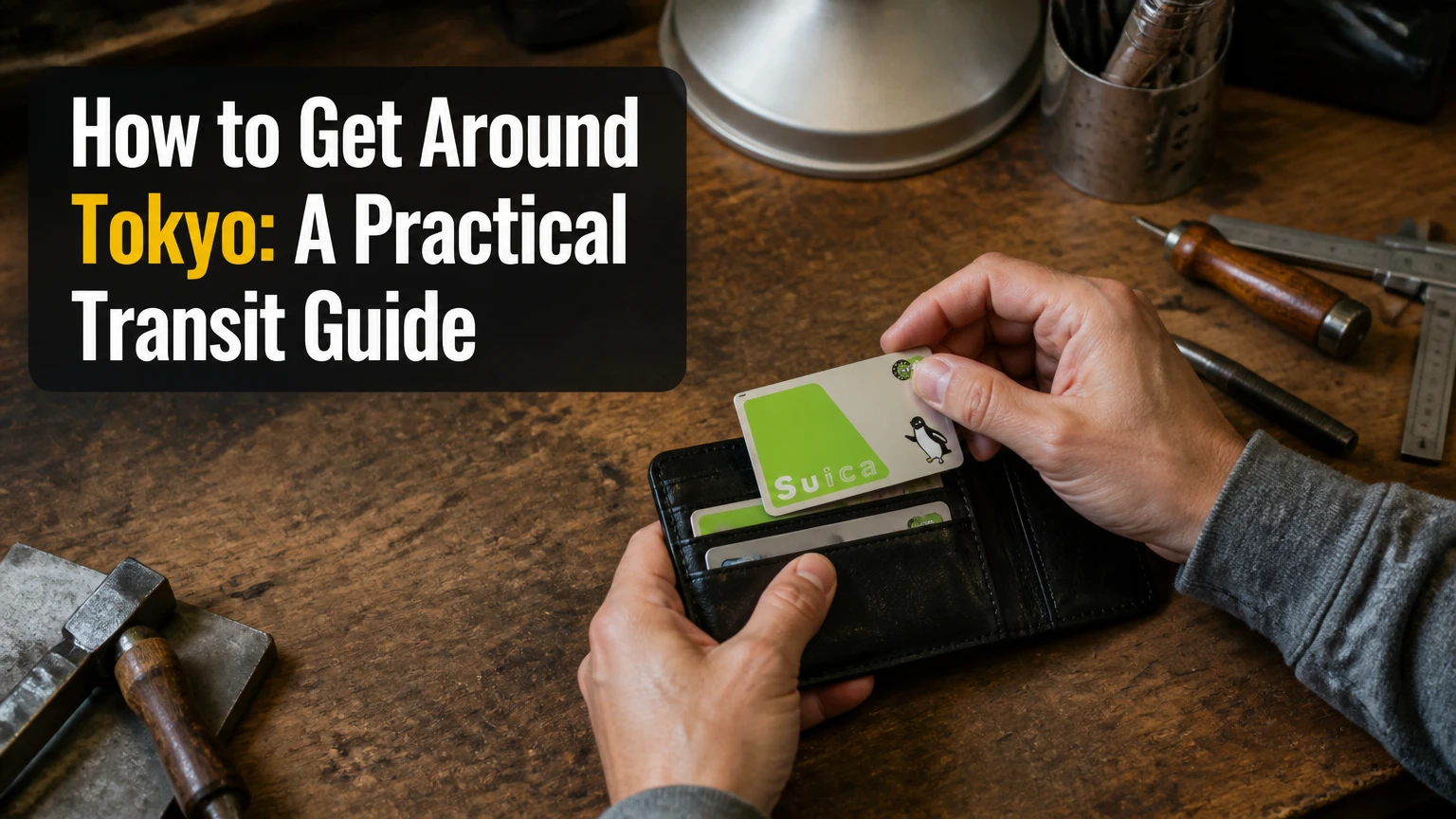
An IC card is a prepaid contactless payment card for rail and bus fares, convenience stores, vending machines, and some lockers. Suica and PASMO are the best-known Tokyo options, and their normal transport functions are broadly interoperable across Japan.
| Payment method | Typical setup cost | Where it works | Main limitation |
|---|---|---|---|
| Mobile Suica or PASMO | $0 card fee, prepaid balance required | JR, subway, buses, shops | Foreign Android compatibility can vary |
| Physical IC card | About $3.30 refundable deposit, plus balance | Trains, subways, buses, retail | Availability can change during shortages |
| Contactless bank card | $0 setup | Selected gates and routes | Not accepted across the entire network |
| Paper ticket | About $1.00-$2.50 per trip | The purchased route | Requires fare and destination selection |
Apple Wallet generally provides the smoothest setup for visitors with a compatible iPhone or Apple Watch. Foreign-issued Android phones may not support Japan’s mobile FeliCa standard, so Android travelers should check compatibility before relying on a digital card.
A physical IC card does not replace a reserved Shinkansen ticket, an airport express reservation, or every regional pass. Store enough value for the day, and keep a backup payment card because some overseas cards fail when adding funds to mobile wallets.
How are fares calculated?
Tokyo rail fares are distance-based, and the exact amount depends on the operator, route, and whether the journey crosses a company boundary. An IC card automatically records entry and exit, which avoids most fare calculations at ticket machines.
| Journey type | Typical fare in USD | Typical travel time | Example |
|---|---|---|---|
| Short local trip | $1.00-$1.50 | 5-15 minutes | Shibuya to Harajuku |
| Central cross-city trip | $1.50-$2.50 | 15-35 minutes | Ueno to Shinjuku |
| Longer private-rail trip | $2.50-$6.00 | 35-75 minutes | Shinjuku to Hakone area |
| Airport rail trip | $7.00-$25.00 | 30-90 minutes | Haneda or Narita to central Tokyo |
Do not assume a route with fewer stops costs less. A private railway and a subway may take similar time but use different fare systems, and a direct route can be cheaper than a transfer involving multiple operators.
The Main Rail Networks
Tokyo’s train and subway network has two practical layers: JR East surface trains connect major hubs and suburbs, while Tokyo Metro and Toei Subway provide dense coverage through central districts. Private railways extend from central hubs toward airports, beaches, theme parks, and neighboring prefectures.
When should you use JR East?
JR East is useful for moving between major urban hubs, especially when the route follows the Yamanote, Chuo, or Sobu corridors. The Yamanote Line is a 34.5-kilometer loop with 30 stations, including Shinjuku, Shibuya, Tokyo Station, Ueno, Akihabara, and Ikebukuro.
The Yamanote Line is easy to understand but not always the fastest option. A Tokyo Metro route may bypass much of the loop, while the Chuo Line can be quicker between Tokyo and Shinjuku. Use the fastest direct route shown in your navigation app rather than selecting the most famous line automatically.
| JR East line | Main function | Useful stations | Typical visitor use |
|---|---|---|---|
| Yamanote Line | 34.5-kilometer loop | Shibuya, Shinjuku, Ueno | Major-hub sightseeing |
| Chuo Rapid Line | East-west rapid service | Tokyo, Kanda, Shinjuku | Tokyo to western center |
| Chuo-Sobu Line | Local east-west service | Akihabara, Shinjuku, Nakano | Smaller central stops |
| Keihin-Tohoku Line | North-south corridor | Ueno, Tokyo, Shinagawa | Tokyo Station and Shinagawa |
The Yamanote Line has two directions, usually displayed as clockwise and counterclockwise. Check the next major station rather than guessing from a platform’s physical orientation.
When should you use the subway?
Tokyo Metro and Toei Subway are usually best for destinations inside the central wards, including Ginza, Roppongi, Asakusa, Akasaka, Nihombashi, and Omotesando. Tokyo Metro has 9 lines, and Toei has 4 lines, creating dense coverage but also more opportunities to enter the wrong operator’s gates.
| Subway operator | Line count | Recognizable lines | Strong destinations |
|---|---|---|---|
| Tokyo Metro | 9 | Ginza, Marunouchi, Hanzomon | Ginza, Shibuya, Asakusa |
| Toei Subway | 4 | Oedo, Asakusa, Mita | Roppongi, Tokyo Tower, airports |
| Combined subway network | 13 | Metro and Toei interchanges | Central Tokyo transfers |
The Ginza Line is useful for Shibuya, Omotesando, Ginza, Ueno, and Asakusa. The Marunouchi Line connects Tokyo Station, Ginza, Shinjuku, and Ikebukuro. The Oedo Line reaches Roppongi and many inner-city locations, but its deep platforms can require several minutes of walking.
How to Get Around Tokyo by Destination
The best route depends on the destination entrance, not merely the station name. Large stations such as Shinjuku, Tokyo, Shibuya, and Ueno contain multiple operators, distant platforms, and numerous exits.
| Destination | Common rail choice | Typical ride from a central hub | Practical exit advice |
|---|---|---|---|
| Shibuya Crossing | JR Yamanote or Tokyo Metro | 10-25 minutes | Follow Hachiko or Scramble Square signs |
| Asakusa Temple | Tokyo Metro Ginza or Toei Asakusa | 15-35 minutes | Use exits near Kaminarimon |
| Tokyo Station | JR East or Marunouchi Line | 10-30 minutes | Allow 10 minutes inside the station |
| Odaiba | Yurikamome from Shimbashi | 25-40 minutes | Choose the stop nearest the venue |
| Shinjuku Gyoen | Marunouchi Line to Shinjuku-Gyoemmae | 15-35 minutes | The garden has several gates |
| Tokyo Disney Resort | JR Keiyo Line to Maihama | 25-50 minutes | Long walk to Keiyo platforms at Tokyo Station |
How do you reach Haneda and Narita airports?
Haneda Airport is close to central Tokyo, while Narita Airport is outside the city in Chiba Prefecture. Haneda usually takes about 30-50 minutes by rail to central neighborhoods; Narita commonly takes 60-90 minutes, depending on the service and destination.
The Tokyo Monorail links Haneda Airport with Hamamatsucho. Keikyu trains connect Haneda with Shinagawa, Asakusa, and other destinations. Narita Express serves JR stations such as Tokyo, Shinjuku, and Shibuya, while Keisei Skyliner is generally optimized for Ueno and Nippori.
Reserve an airport seat when traveling with large luggage during a busy period. An ordinary commuter train can be cheaper, but it may involve standing and narrow aisles.
Fares, Passes, and Payment
Most visitors should begin with an IC card and buy a special pass only after estimating their planned journeys. A pass saves money when its covered lines match several substantial trips, not when it merely feels convenient.
| Product | Approximate adult price | Validity | Coverage |
|---|---|---|---|
| Tokyo Subway 24-hour ticket | $5.30 | 24 hours after first use | Tokyo Metro and Toei |
| Tokyo Subway 48-hour ticket | $8.00 | 48 hours after first use | Tokyo Metro and Toei |
| Tokyo Subway 72-hour ticket | $10.00 | 72 hours after first use | Tokyo Metro and Toei |
| IC card pay-as-you-go | $1.00-$6.00 typical daily range | Until balance is spent | Participating rail and bus services |
Prices are approximate USD conversions and fluctuate with the exchange rate. The Tokyo Subway Ticket excludes JR East, Yurikamome, Tokyo Monorail, most private railways, and many buses.
A traveler making four or five covered subway rides daily may benefit from the 72-hour ticket. Someone combining JR, subway, and private railways will usually lose flexibility with that pass and should use an IC card instead.
What does a day of transportation cost?
A casual sightseeing day usually costs about $6.50-$10.00 in rail and bus fares. A day involving an airport, Odaiba, or a suburban attraction can reach $15.00-$30.00 before admission fees.
| Travel pattern | Typical daily transport cost | Typical number of rides | Best payment |
|---|---|---|---|
| One neighborhood, mostly walking | $2.00-$5.00 | 1-3 | IC card |
| Central sightseeing circuit | $6.50-$10.00 | 4-7 | IC card or subway pass |
| Mixed JR and subway day | $8.00-$15.00 | 5-8 | IC card |
| Airport plus city travel | $15.00-$30.00 | 4-8 | IC card plus reserved ticket |
The old assumption that every operator transfer creates a large penalty is misleading. The important issue is whether the passenger exits and re-enters, whether the route uses a through-service, and which ticket product is being used.
A Step-by-Step Transit Method
The most reliable Tokyo travel routine is to identify the correct station entrance, select the operator, confirm the platform direction, and save the destination exit before boarding. Navigation apps reduce errors, but they do not eliminate the need to read signs.
- Search the exact destination, hotel, museum entrance, or street address in Google Maps or Japan Travel by NAVITIME.
- Compare routes by total time, transfers, walking distance, and operator changes.
- Confirm the station name and line color before entering a gate.
- Tap the same IC card or device at entry and exit.
- Follow signs for the platform and check the train’s final destination.
- Board a car that matches the app’s recommended position when the station is large.
- Start following exit signs before leaving the platform.
- Recheck the surface map after reaching street level, because a station can have several blocks between exits.
Tokyo Metro and JR East signs commonly include English, and major stations display numbered exits. The station name alone is insufficient at sprawling interchanges. Shinjuku Station, for example, contains multiple railway companies and underground passages that can turn a nominal 5-minute transfer into a 15-minute walk.
Expert insight: The shortest route in Tokyo often means the fewest station entrances, not the fewest train stops. A route with one transfer and a nearby exit can save more time than a theoretically direct service that ends in a long underground passage.
Walking, Buses, Taxis, and Rental Cars
Walking is often the fastest way to connect nearby neighborhoods, while buses and taxis solve gaps that rail cannot. Rental cars are rarely efficient for central Tokyo because traffic, parking prices, narrow streets, and toll roads add cost without improving sightseeing access.
| Mode | Typical cost in USD | Typical speed or time | Best use |
|---|---|---|---|
| Walking | $0 | 10-45 minutes between nearby areas | Harajuku to Shibuya |
| City bus | $1.50-$2.50 | 20-60 minutes | Rail-poor local streets |
| Taxi | $3.30 starting fare, often $10-$30 total | 10-40 minutes | Luggage or late night |
| Rental car | $50-$120 per day before fuel and tolls | Variable, often slow | Rural trips outside Tokyo |
When is a taxi worth the cost?
A Tokyo taxi is most useful after the last train, with several suitcases, for travelers with limited mobility, or when three or four people can share the fare. Traffic makes taxis unreliable for strict daytime arrival deadlines, especially around Shibuya, Shinjuku, and Ginza.
The typical Tokyo taxi starting fare is approximately $3.30, with the meter increasing by distance and time. A 20% night surcharge generally applies from 10:00 PM to 5:00 AM. Automatic doors are operated by the driver, so passengers should not pull them open.
Taxi apps such as GO can reduce language friction, but street taxis remain common near stations and hotels. Confirm the destination address in Japanese when possible, particularly for hotels with similar English names.
When are buses better?
Buses reach destinations that sit far from a rail station, including residential streets, parts of Asakusa, and some museum districts. They cost little, but traffic and boarding procedures make them slower to learn than trains.
Enter through the front or rear door according to the route’s local system, and follow the fare instructions displayed inside. IC cards simplify payment. A navigation app may show a bus stop on the opposite side of a major road, so check the direction before waiting.
Should you rent a car in Tokyo?
Most visitors should not rent a car for central Tokyo. Rail is usually faster, parking commonly costs about $15.00-$40.00 per day in central districts, and navigation becomes harder in dense streets with limited stopping space.
A car becomes more reasonable for rural destinations, large family groups with child equipment, or a multi-day itinerary through areas with infrequent trains. Compare the rental fee, fuel, expressway tolls, parking, and one-way return charge before booking.
Timing, Crowds, and Last Trains
Tokyo trains generally operate from about 5:00 AM until midnight, with route-specific variations and occasional later services near major hubs. There is no dependable 24-hour rail network, so a missed final departure can require a taxi or an overnight stay.
| Situation | Typical time | Transport effect | Practical response |
|---|---|---|---|
| Morning commuter peak | 7:30-9:00 AM | Crowded trains | Avoid large suitcases |
| Evening commuter peak | 5:30-7:30 PM | Busy platforms | Add 10-20 minutes |
| Ordinary daytime service | 9:30 AM-4:30 PM | Frequent trains | Best sightseeing window |
| Final departures | About 11:30 PM-1:00 AM | Route-specific cutoff | Check the exact station |
| First departures | About 5:00-5:30 AM | Limited early service | Use taxi if timing matters |
The last train is not one citywide time. A train may leave Tokyo Station after the last useful connection has departed from Shibuya or Asakusa. Check the entire route, including the final transfer and walking segment.
Large luggage is particularly difficult during commuter peaks. Use hotel luggage forwarding, known in Japan as takuhaibin, when moving between cities. Yamato Transport and similar providers commonly deliver bags to the next hotel in roughly 1-2 days, depending on the route and cutoff time.
Expert insight: Add a 15-minute buffer for major-station transfers and a 30-minute buffer for airport connections. Google Maps estimates train movement accurately, but it cannot fully predict a first-time visitor’s walking time through Tokyo Station or Shinjuku.
Problems and Edge Cases
Most transit failures in Tokyo come from choosing the wrong operator, entering an unsuitable gate, or underestimating station walking time. Each problem has a practical recovery method.
- Wrong line or direction: Exit only if necessary, then use platform signs to reverse direction.
- Insufficient IC balance: Add funds at a station machine, convenience store, or supported mobile-wallet payment screen.
- Lost IC card: A registered card may be replaceable; an anonymous card generally cannot recover its stored balance.
- Missed last train: Compare the taxi fare with a nearby hotel or 24-hour facility before accepting a long cross-city ride.
- Heavy luggage: Use an elevator route even when it adds several minutes.
- Rain or heat: Choose underground passages where practical, but check whether the passage exits near the destination.
- Accessibility needs: Use station staff and accessible-route information because not every exit has an elevator.
Tokyo Metro’s passenger etiquette guidance states, “Please refrain from talking on your mobile phone.” Keep calls off trains and buses, set the device to silent mode, and avoid blocking doors with bags.
Reserved priority seats are intended for people who need them, including older passengers, pregnant passengers, and passengers with disabilities. Train doors can close quickly, so do not hold a door for a companion who is still walking through the station.
Expert insight: A station exit can matter more than a station itself. For a hotel, restaurant, or temple, save the exit number and street-side landmark in advance, because underground maps often cover several city blocks.
Useful Rules for Choosing a Route
Use this decision sequence when two routes appear similar:
- Choose a direct train when the time difference is under 10 minutes and luggage is involved.
- Prefer one operator when the fare difference is small and the station transfer is complex.
- Choose JR East for major Yamanote hubs, Tokyo Station, Shinagawa, and many suburban destinations.
- Choose Tokyo Metro or Toei for central neighborhoods served by a nearby subway entrance.
- Choose walking for trips under 20 minutes between clearly mapped destinations.
- Choose a taxi when rail has stopped, mobility needs justify the cost, or four passengers can share it.
- Choose an airport express when a reserved seat and luggage space are more valuable than the lowest fare.
Tokyo transit is excellent for independent travelers, but it is not always comfortable for every situation. A family with a stroller may prefer a taxi for a short station-to-hotel transfer, and a traveler with a fixed airport deadline may reasonably pay for a reserved train rather than optimize every dollar.
Frequently Asked Questions About how to get around Tokyo
Can I pay for Tokyo trains with cash?
Yes. Ticket machines accept Japanese cash and usually provide English instructions, but an IC card is faster for repeated trips. Cash remains useful for topping up some physical cards and paying at smaller restaurants or local buses that do not accept every contactless bank card.
Is Tokyo safe for solo travelers using public transit?
Tokyo’s rail system is generally suitable for solo travel, and major stations have English signs, staff, and information counters. Keep valuables secure in crowded cars, avoid boarding marked women-only cars during their operating periods if you are not eligible, and save your hotel address offline.
Can children use an IC card?
Children can use child-rate IC cards when the card is issued with the child’s age category and identification requirements. An adult should not lend one adult card to several passengers because each rider needs a separate tap at entry and exit.
Do I need reserved seats on Tokyo trains?
Ordinary local trains do not require reservations. Reserved seats are useful for airport express services, limited-express trains, long private-rail journeys, and travel with luggage. Check whether the service requires a separate limited-express supplement before boarding.
Are bicycles a good way to travel around Tokyo?
Bicycles work well for local exploration in quieter districts, but they are less practical for cross-city travel because major roads, hills, rain, and parking restrictions add friction. Use a legal rental cycle, park only in designated areas, and avoid leaving a bicycle near station entrances.
What should I do if I miss my train?
Wait for the next scheduled service unless the route is near its final departure. If the last train has gone, compare a taxi, a nearby hotel, and an overnight venue; do not assume another subway line will remain open because Tokyo operators close on different schedules.
Conclusion
The most reliable way to get around Tokyo is to use a mobile or physical IC card, compare JR East with Tokyo Metro and Toei, and plan the station exit as carefully as the train route. Use walking for nearby districts, taxis for late-night or luggage-heavy journeys, and airport or suburban reservations when time and seating matter more than the lowest fare.